Showing posts with label young adult. Show all posts

Discount of the day: Daughter of the Sun (Cult of the Cat series, Book 1) only $.99!


Title: Daughter of the Sun (Cult of the Cat series, Book 1)
Author: Zoe Kalo
Genre: YA mythological fantasy/paranormal
Word count: 93,000 words / 330 pages
Official Launch: May 1, 2016

Only $.99 until Wednesday May 11th(regular price $4.99)

Get your copy on Kindle today!

Daughter of the Sun, Book 1 - blurb

Sixteen-year-old Trinity was born during a solar eclipse and left at the doorsteps of a convent along with a torn piece of papyrus covered with ancient symbols. Raised by nuns in the English countryside, she leads a quiet life until she’s whisked away to the Island of Cats and a grandmother she never knew.

But before they can get to know each other, her grandmother dies. All that Trinity has left is a mysterious eye-shaped ring. And a thousand grieving cats. As Trinity tries to solve the enigma of the torn papyrus, she discovers a world of bloody sacrifices and evil curses, and a prophecy that points to her and her new feline abilities.

Unwilling to believe that any of the Egyptian gods could still be alive, Trinity turns to eighteen-year-old Seth and is instantly pulled into a vortex of sensations that forces her to confront her true self—and a horrifying destiny.

What readers are saying….

“This was an amazing story!” –Hot Off the Shelves

“This book was so super good! Great writing, great characters, great plot. Very immersive reading experience.” –Awesome Book Assessment

“Wow- this book was a stunning, magnificent adventure! Very well written and full of intricate details, I was immediately drawn in and just absolutely did not want to put this one down... The intrigue just leaves you racing through the pages to find out what will happen next! I absolutely, completely enjoyed this book and can't wait to see what happens in the next one!” –The Recipe Fairy

“The way [Zoe Kalo] writes cats into the book is astounding. Every little quirk, mew and lick is incredibly authentic. I love it when a writer is skilled at writing about the animals in the character’s story, it makes it more warm and fuzzy, no pun intended.” –Samantha Writes

“Daughter of the Sun is an intriguing young adult mythology read full of mystery, magic, action, and history… [it] kept me flipping pages like an addict.” –Fishing for Books

“Oh my God. This is definitely a ‘something.’ This concept and the plot is soooo unique and weird and fascinating that I did not want to put this down. I literally breezed through this one…. This book was an overdose of kitty love.” –Grape Fruit Books

“If you are looking for a Young Adult Fantasy book that is different from the norm, then look no further. Daughter of the Sun is full of Egyptian mythology, with layer upon layer of mystery just waiting to be uncovered.” –Archaeolibrarian

About the Author
A certified bookworm, Zoe Kalo has always been obsessed with books and reading. Reading led to writing—compulsively. No surprise that at 16, she wrote her first novel, which her classmates read and passed around secretly. The pleasure of writing and sharing her fantasy worlds has stayed with her, so now she wants to pass her stories to you with no secrecy—but with lots of mystery…
A daughter of adventurous expats, she’s had the good fortune of living on 3 continents, learning 4 languages, and experiencing a multicultural life. Currently, she’s working on a Master’s degree in Comparative Literature, which she balances between writing, taking care of her clowder of cats, and searching for the perfect bottle of pinot noir.
Connect with Zoe Kalo on the web: www.ZoeKalo.com /Facebook / Twitter

Guest post by YA Mystery Author Gin Price: Characters Rock Out Too. “That’s My Fruit Preserves!”

One of the coolest aspects of writing a new book for me is deciding the tone of the story. I love figuring out who my characters are and because of who they are, where they will take their tale.
               Part of determining who they are, is determining who they dance in the shower to. Does the character secretly love show tunes, and screams out “One Day More” at the top of his or her lungs, or is the character more inclined to listen to death metal and scream into the spray of water until their throat burns. Or, creepy yet…does the character hate music? Does the character think anything that can affect the mood is manipulation of some sort?
               Usually when I’m writing, I hit random music on the playlist, a mix of all genres until I think…yeah, this is (insert character’s name here)’s song.
               Sometimes I will have an idea of the character already, and I’ll try and find an anthem for them.
               Back in my roleplaying days (yes I’m a proud dork) when you entered a chat room, you’d have a sound wave you could play that gave a short excerpt of music that represented your character. Of course you had to mail it to everyone who didn’t have it so they could hear it, but I always enjoyed knowing what music other role-players felt represented their characters.
               I think that kind of stuck.
               For each of my characters in the book On Edge, I had a song that I always thought of for them when they entered a scene.
My main character, LL, is a strong tough girl. Maybe a little too tough. For her, I like to listen to Esthero. That group has always signified strength for me. But her favorite band is Imagine Dragons, and she loves the song Radioactive, even though it has been grossly over-played in the past.
Haze, the graffiti artist LL falls in love with, has System of a Down on his Pandora.
Warp, LL’s hot-head brother—I swear every time I write him I am humming “Up In Here” by DMX.
Surge, one of LL’s two besties, is a massive Eminem fan, the older Shady stuff.
Liv, the other best friend, is a fan of Gwen Stefani…secretly. She’d never admit to having a high opinion of anyone.
For my next novel, I need to find new music for the surviving characters, and I think that’s going to be one of the more fun parts of plotting. Gotta have a playlist after all!
Anyone who has read my book, I’d love to know what music you think represents the characters as you’ve interpreted them.
I’d also like you to share some of your character’s theme songs. Or maybe even one for you personally. 
///////////////////////////////////////////
Title:  ON EDGE
Genre:  Mystery/YA Mystery
Author: Gin Price
Publisher: Poisoned Pencil
Find out more on Amazon
About the Book: 
When a serial-killing graffiti artist starts painting your picture all over town…it puts a girl on edge.
Emanuella “LL” Harvey puts her gymnastic skills to good use as a member of her brother’s Parkour group. Freerunning, jumping, and climbing over their corner of the city like it’s an obstacle course gives them something to take pride in and keeps them out of trouble—sort of. But trouble finds LL when she runs into Haze, a talented graffiti artist whose sister Heather was murdered two years before. Freerunner and Writer promptly fall in love, but they decide to hide their relationship till they’re sure it’s the real thing—and until they can find a way to placate LL’s hotheaded brother, who has it in for Haze and his gang. But when portraits of LL—done in Haze’s distinctive style—start popping up on city walls, all hell breaks loose. LL’s brother threatens a gang war, which LL tries to avert by identifying the Writer who is really responsible for the paintings. But when another teen is murdered, it looks bad for Haze, especially when LL discovers that Heather’s killer and her portrait-painter are one and the same.
SONY DSC
About the Author: 
Using knowledge learned from her childhood environment, Gin Price’s writing is often steeped in street life, whether good or bad. Hoping to show support for art that is often misunderstood, she published her debut novel, On Edge, focusing on graffiti and parkour, two expressions dear to her heart. Currently, she is a resident in the Metro Detroit area, living with her loving biologist man, David, her two children, Shyla and Hayes, many reptiles and a troublesome cat named Wallace.
Connect with Gin Price on the web:


Guest post: "Scribbling for Two?" by YA Fantasy Authors Leif and Jason Grundstrom-Whitney

There are distinct challenges for a writer in developing an idea for a poem, short story or book. Where do you start? How do you start? Are you the kind of writer that plans every sentence, a wordsmith that has difficulty moving on as it were before the perfect sentence lies on the page before you? Are you the type of writer that follows an intuitive response, just typing on a tenuous thread that starts to take form as you are in the process itself? Are you the type of writer that blueprints an entire book first before a word of it is ever written? All writers are as unique in their styles as the individual is in personal characteristics and attributes. All have their valid stances and many mix and match the styles written above.

The challenge increases when you have two writers with distinctive styles that come together for a literary project. Though having a great deal in common with one another, we write in different styles; yet we always somehow enjoy the crafting of the daily section. We thought for the purpose of this blog to give you a snapshot of what a typical writing day looks like for us to perhaps help other writers and also show that a mutual paring for a literary project can and does work.

We often start our day with a vigorous walk. On this walk, taking in all the sensory stimulation, the conversation starts generally and rather unfocused until the topic of the book is brought up. On these strolls, we have been able to do a tremendous amount of blueprinting. We talk about what chapter we are currently working on. It might start off as a theme, as in the variation of cultural stories or satirical subversion of young adult fiction tropes we have written into the book. What is the protagonist up to in this chapter? What is the antagonist up to? What is the tension in the interplay with these two amongst the myriad other characters we have in the novel? How do we move the plot forward? Is it helpful to the story? We have had many long excursions filled with blueprinting, interrupted and furthered by lines that jump out to us like zaftig clouds that roll by in the vast azure sky.

We then sit at our dinner table that is a family heirloom across from one another with our separate writing devices. Occasionally we gaze out at the beautiful pastoral landscape outside our large picture windows. Working a chapter at a time, gradually a comprehensive blueprint is formulated. Most of the time there is agreement, though there are periods in which disagreement occurs. There are some days we come to an impasse and have to stop for the day and move away from the project so that we can come back together after following our own private pursuits, yet steeping in the unconscious the problem delaying our progress.


Once the blueprint has been forged, we tackle different sections, having assigned them in a scheme to suit our strengths, and begin working our way slowly towards the completion of the book. Once the writing day is done, we read to each other the sections we have created. Occasionally we will edit right there and then, other days we will leave this as the first project of the next day. We proceed in this fashion until the end of the manuscript: brainstorming sessions/strolls, blueprinting, writing, reading, and editing until we feel our work has been completed and our creativity thoroughly exhausted. We then go through the final edits, carefully combing the manuscript for typos, redundancies, and expanding on what is incomplete and adding what is missing. This may seem to some a lot of work given that there must be a reasonably generous consensus with a section before moving on. Having unique and different styles of writing, we offer each other immediate feedback and both of us have grown as writers whilst working on this creative project. Of course we also feel the kinship of being a father and son team as a continuance of the long line of storytellers that we descend from. It may not be the cleanest process but it is one wherein we have excelled and hope to continue to do so well into the future.

//////////////////////////////////////


Leif Grundstrom-Whitney is the proud co-author of the epical satire The Hidden Chalice of the Cloud People; the wicked and witty character known as Facinorous contained therein is a product of his multifarious mind. He has been published in several obscure poetry journals (hold your applause). To say that he is an edacious reader would be an understatement worthy of Hemingway. If he had a spirit animal, it would probably be a gregarious raven who knows how to play a Hammond B-3 organ.
Jason Grundstrom-Whitney has been a Social Worker and Substance Abuse Counselor in the State of Maine for many years. In this time, he has introduced meditation (tai-chi, qigong, yoga, and meditation) groups to teens when told he would fail. This was one of the most successful and long lasting groups. He developed a Civil Rights/Peer Helper course that won state and national awards (for High School) and has worked as a civil rights activist. He has also worked as a long term care social worker and now works as a Hospice Medical Social Worker. Jason is a poet, writer, and musician playing bass, harmonica and various wind instruments.

Guest post by Christopher Nuttall, author of ‘Trial by Fire’


Schooled in Magic is a fantasy book, but it draws extensively from real history.  The Allied Lands bear a strong resemblance to Middle Ages Europe, complete with self-obsessed rulers, clergy and commoners struggling to build a united state and a looming threat on the southern border from the necromancers.  I studied extensively to create the matrix for the Nameless World, reading hundreds of history books about kings, princes and their worlds.

Princess Alassa, for example, is based - at least in part - on Mary Queen of Scots.  Scotland was simply not used to having a queen on the throne (nor was England, but England was a more established country at the time) and the concept of being ruled by a woman shocked many of the higher noblemen.  Zangaria is a cross between Scotland and the United Kingdom of Charles I; there are social tensions between aristocratic, magicians, businessmen and traders, all of whom want to secure their own position and, if possible, demolish their enemies.  The prospect of Alassa - who was something of a brat before she went to Whitehall School - taking the throne spurred her enemies to act. 

Real history also discusses the limitations facing rulers in their times.  To us, the idea that Mary couldn’t rule in her own right seems absurd; to her noblemen, it made a convenient excuse for ignoring her from time to time.  (Elizabeth I had the same problem.)  Mary had to balance a number of competing factions, all of whom hated the others; in hindsight, it isn’t really surprising she lost her balance and fell off the tightrope. 


That’s not to say that real history should be used as a guide.  Alassa … may not end up being chased off her throne by her noblemen.  The story will go the way that suits its internal logic - and, unlike Mary, Alassa has magic.  On a fundamental level, the Allied Lands are different from Earth.  And that is something that should always be borne in mind.

About the Book
Title: Trial By Fire (Schooled In Magic 7)
Genre: Fantasy
Author: Christopher G. Nuttall
Publisher: Twilight Times Books
Sample Chapter HERE.
Purchase on Amazon / OmniLit
Three years ago, Emily killed the Necromancer Shadye before he could sacrifice her and destroy the Allied Lands.  Now, the shadows of the past hang over Whitehall as Emily and the Grandmaster travel into the Blighted Lands to recover anything Shadye might have left behind, before returning to Whitehall to start the fourth year.  For Emily, it is a chance to stretch her mind and learn more about new and innovative forms of magic … and to prepare for the exams that will determine her future as a magician.
But as she starts her studies, it becomes clear that all is not well at Whitehall.  Master Grey, a man who disliked Emily from the moment he met her, is one of her teachers – and he seems intent on breaking her, pushing her right to her limits.  In the meantime, her friends Alassa and Imaiqah are acting oddly, Frieda seems to be having trouble talking to her and – worst of all – Caleb, her partner in a joint magical project, is intent on asking her to go out with him.
As she struggles to cope with new challenges and to overcome the demons in her past, she becomes aware of a deadly threat looming over Whitehall, a curse that threatens her very soul.  And when she makes a tiny yet fatal mistake, she finds herself facing a fight she cannot win, but dares not lose…
nuttall_pix_med
About the Author
Christopher Nuttall was born in Edinburgh, studied in Manchester, married in Malaysia and currently living in Scotland, United Kingdom, with his wife and baby son.  He is the author of twenty novels from various publishers and thirty-nine self-published novels.
Connect with the author on the web:


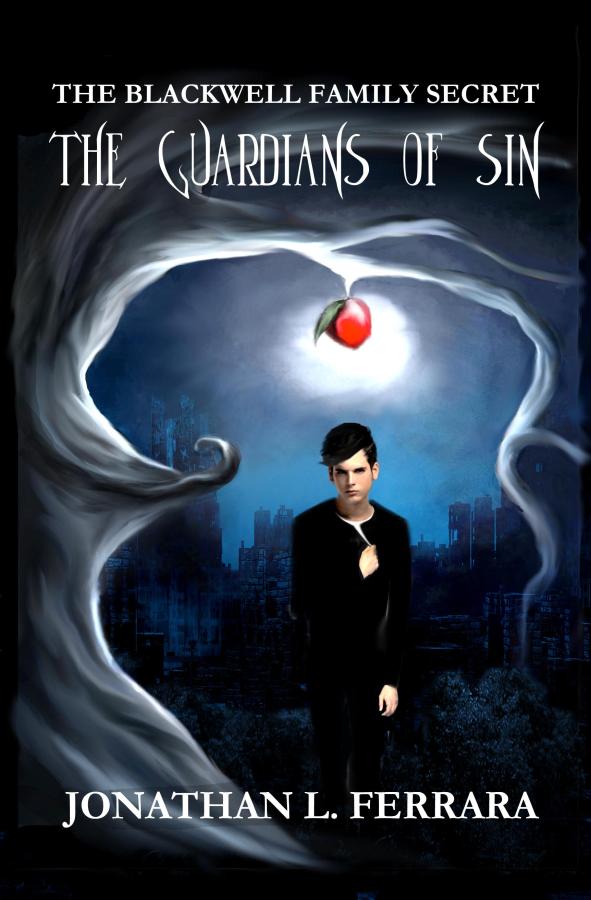
Book Review: ‘The Blackwell Family Secret: The Guardians of Sin’ by Jonathan L. Ferrara


blackwellThe Blackwell Family Secret: The Guardians of Sin is book 1 in Jonathan L. Ferrara’s YA urban fantasy series. I must say this was a thoroughly enjoyable read, and I can’t wait to read the sequel.
After his parents are killed by a demon, sixteen-year-old Nicholas Blackwell is put under the protection of the Vatican and sent to a boarding school surrounded by a deep forest: St. Christopher’s Academy, complete with iron gates, gargoyle statues, and gateposts that leer at him. As his life is in danger, this is the only place where he can be kept safe. One night he ventures into the woods and a serpent tricks him into eating the forbidden fruit, with disastrous consequences–for the Guardians of the Seven Deadly Sins have been unleashed, and now Nicholas must go into the City of Demons and defeat the Princes of Hell, and in the process discover his family secret, one that could change the entire world…A daunting task for a teen, even if he happens to be the school’s cockiest leader of mischief.
I loved the book. Nicholas is a charming protagonist, cleaver, arrogant, yet brave and selfless at times. Ferrara’s world, inspired by Biblical tales, of course, is elaborate and imaginative. I especially loved his focus on the Seven Deadly Sins–what they are, where they came from, etc. Angels and demons are intertwined with fantasy elements, and the whole concept of good and evil is explored.
There’s romance, action, adventure, and mystery. It is also a bit dark at times, which I enjoyed. Ferrara is a talented writer, his prose smooth and his dialogue witty. The pace was excellent and the story kept moving forward with increasing tension until the very satisfying ending that left me hungry for book 2. Recommended!
Find out more on Amazon.
My review was originally published in Blogcritics.

Interview with James Ryan Daley, author of Jesus Jackson


JRD1James Ryan Daley is a writer, editor, and digital designer. After earning an MFA in fiction at the Vermont College of Fine Arts in 2004, James has spent most of the years since then teaching writing to college students, creating websites about video games, and editing anthologies of fiction and political rhetoric. When he’s not obsessively poring over pixels and pronouns, James can usually be found arguing with strangers in the Internet or seeking out adventure with his wife and two daughters. Find out more from his website at www.jamesryandaley.com.

Welcome to BloggerNews. Can you begin by telling us when you started writing?

Well, my mother loves to tell a story about how I wrote my first story in 3rd grade, so I guess I’ll go with that. Really, though, I first started to become passionate about writing in high school–specifically, the summer between my junior and senior years. I had read On the Road the same month that fell head over heels for a pretty girl that lived 300 miles away from me. Now when you’re a sixteen year-old romantic (as I certainly was) and those two things happen within such a short time, there’s really only one course of action you can take: you sneak out of your house in the middle of the night, you hitchhike to see the girl, and you write down every thought you have in a notebook. After that, I just kept on writing.

What is your novel about?

Jesus Jackson is the story of a 14-year-old atheist investigating his brother’s mysterious death at conservative Catholic high school. So on the surface, it’s a murder mystery: he searches for clues, follows leads, and tries to find the truth about the murder. But to me, Jesus Jackson is really about the deeper truths that the protagonist finds himself searching for in the midst of this mystery: Why are we here in this life? What does it all mean? What happens after we die? This philosophical quest drives the story just as much as the quest to find the killer.

jesusWhat inspired you to write it?

Jesus Jackson really comes out of all the thoughts and feelings that I had about religion when I was a teenager (and, to be honest, still have today). Like Jonathan, I came to the conclusion pretty early that religion just wasn’t my thing, and then had to learn how to deal with the difficult parts of life in the absence of that type of faith. Writing Jesus Jackson as a mystery just seemed like the obvious way to go: after all, what better way to explore the mysteries of life than through an actual mystery?

Where can readers purchase a copy of your book?

Everywhere! Of course, Jesus Jackson is available on Amazon, but you can purchase it anywhere books are sold, so support your local indie bookstore!

Do you have a video trailer to promote your book?  If yes, where can readers find it?

I do! I am actually kind of insanely proud of my trailer. I spent a ludicrous amount of time teaching myself how use professional film-making software, and then an even more ludicrous amount of time making the actual video. It took a ton of effort, but it was totally worth it. Readers can find the trailer (and a few other fun videos) here: http://youtu.be/iD3nMqCzjxo

What is one piece of advice you would like to share with aspiring authors everywhere?

Focus on the writing. Focus on the book. Far too often, I see new authors get so caught up with the publishing process that they lose sight of the vastly more difficult task of writing a really good book. One of my college professors once told me that there are only two things you need to do to become a published author: write well and submit. It’s the first part that’s the hard one.

What is up next for you?

Well I am working on finishing up my second novel right now, but I don’t like to talk too much about anything I’m writing until it’s done.  Stay tuned, though…

Interview with Tudor Robins, author of Appaloosa Summer (YA)

Tudor Robins is an Ottawa-based young adult author whose first novel, Objects in Mirror, was named a Best Book for Kids and Teens by the Canadian Children’s Book Centre.

She gathered publishing-related experience in her roles as a magazine editor and publishing sales representative, as well as working in offset and digital printing. Tudor currently teaches writing workshops for adults and children, as well as developing writing contests and programming to motivate young writers.

Tudor loves reading, writing, and horseback riding, and spending time with her husband and two sons.

Appaloosa Summer is now available in paperback through Amazon (link), and can also be purchased in the Kindle store (link).

Receiving messages from readers is one of Tudor’s favorite things, so please feel free to visit her website and connect with her on Facebook.

Connect with Tudor Robins:
Author Website 
Facebook
Twitter
Goodreads


About The Book


Sixteen-year-old Meg Traherne has never known loss. Until the beautiful, talented horse she trained herself, drops dead underneath her in the show ring. Jared Strickland has been living with loss ever since his father died in a tragic farming accident. Meg escapes from her grief by changing everything about her life; moving away from home to spend her summer living on an island in the St. Lawrence River, scrubbing toilets and waiting on guests at a B&B. Once there, she meets Jared; doing his best to keep anything else in his life from changing. When Jared offers Meg a scruffy appaloosa mare out of a friend’s back field, it’s the beginning of a journey that will change both of them by summer’s end.

Appaloosa Summer can be compared to Heartland TV show - http://www.cbc.ca/heartland/


For More Information:


Discuss this book at PUYB Virtual Book Club on Goodreads.


Can you tell us what your book is about?

Sure! I have a more detailed description:

Sixteen-year-old Meg Traherne has never known loss. Until the beautiful, talented horse she trained herself, drops dead underneath her in the show ring.

Jared Strickland has been living with loss ever since his father died in a tragic farming accident.

Meg escapes from her grief by changing everything about her life; moving away from home to spend her summer living on an island in the St. Lawrence River, scrubbing toilets and waiting on guests at a B&B.

Once there, she meets Jared; doing his best to keep anything else in his life from changing. When Jared offers Meg a scruffy appaloosa mare out of a friend’s back field, it’s the beginning of a journey that will change both of them by summer’s end.

Or, a very short description:

When Meg’s horse dies in the middle of a jumping course, she gives up showing, and moves to her family’s cottage for the summer, only to be guided back to the show ring by a scruffy appaloosa mare.


Why did you write your book?

It took a very long time to get my first book, Objects in Mirror, published. I finished the first draft in 2007, and the book wasn’t published until June 2013. That process involved lots, and lots of querying, pitching, writing, and re-writing along with huge stretches of waiting. If I hadn’t been working on Appaloosa Summer, the waiting would have been unbearable.

So, I wrote Appaloosa Summer to be able to keep moving forward with my writing while I waited for Objects in Mirror to be published, but I also wrote it because it was in my head – not at a conscious level, but deep in there somewhere – and I needed to get it out. There are about six more books in my head, and whenever I finish one it feels like two more take its place!


Can you tell us a little about your main and supporting characters?

Well, in Appaloosa Summer we meet Meg Traherne, who is a horse-loving city girl. She’s been happy with her life, but when her horse drops dead underneath her in the show ring she starts to re-evaluate everything, which leads to a big shake-up.

We also meet Meg’s friend, Slate, who I personally really like, and find quite funny, and would love to have as my sister, or best friend.

And then there’s Jared. Jared’s something special. Let’s just say I’m sitting here, smiling, just thinking about him …

There’s also a cast of supporting characters, all of whom I’m really invested in. Most will go forward in the trilogy, and one or two may take a larger role.

Those are some of the specifics about this book, however, during the editing process my editor gave me something to think about that’s changed how I approach and develop my characters forever. This is what she said:

“Most people believe themselves to be doing the right thing most of the time. It’s part of what makes us human. How do your antagonists believe themselves to be doing the right thing?”

We were specifically discussing antagonists, but I now consider this advice for all my characters. We all do things sometimes that make perfect sense to us, but can have bad consequences, or be seen unfavourably by others. It’s that underlying motivation that makes a character believable, and likable.

I try to always consider the above question when writing all my characters.


Do you tend to base your characters on real people or are they totally from your imagination?

I definitely don’t consciously base my characters on real people, although I know elements of real people I’ve met work their way into my characters.

Due to my journalism background, I feel a big responsibility to be factually accurate, even when I’m writing fiction. So, I don’t tend to let myself twist the truth, or change things around, even if they don’t seem that important, and even if doing so would make the story much easier to write.

Because of that, I feel like my characters are one of the main things I’m free to run with, so I wouldn’t want them to have to be like somebody else (even if only in my head).


Are you consciously aware of the plot before you begin a novel or do you discover it as you write?

I would say I’m consciously aware of the basic premise – using Appaloosa Summer as an example; a girl loses her horse, and moves to a rural island for the summer – but as to how the story unfolds, I feel like that becomes clear to me as I go.

It’s great to be asked this question right now, because Hugh Howey recently wrote a very interesting blog post about this very issue. The part of it that really rang true to me was this:

Ever had the feeling you were forgetting something as you left the house? You walk around, wracking your brain, trying to figure out what it is. Exhausting every option, you decide your intuition is wrong. It isn’t until you’re half an hour away from the house that the missing thing percolates up to the conscious level. This is writing. You know what happens next. The challenge is remembering.


Does the setting play a major part in the development of your story?

Absolutely! In Appaloosa Summer, in particular, I feel like the island is a character. The feedback I’ve been getting from readers all over the world is that they feel the same way, too.

In some ways, the ferry is also a character – not up front – but because of the limitations it places on other characters. The fact is, on an island, you can’t always get where you want to go exactly when you want to go there. This changes the way people act, and interact.

This book wouldn’t have been the same in a different setting.


Have you suffered from writer’s block and what do you do to get back on track?

I don’t tend to suffer from writer’s block – mostly because I don’t ever get enough time to write. I write in fits and starts between all my other life activities, so when I get to write it’s a big relief and I want to take advantage of it.

I also find certain things tend to get my writing brain “unstuck”. Going for a run will always do it, and I’m usually conscious of working out plot problems while I run. Skiing or riding often help as well, but in those cases it’s usually more that my brain works away on writing problems in the background while my body is focused in the more immediate, physical activity.


What do you like the most about being an author?

It’s really hard for me to imagine being anything else, so I would say I like most parts of it. The writing is, obviously, pivotal. However, with Appaloosa Summer, I’ve also been able to make all my own business, sales, and promotion decisions, and I’ve really loved doing that. I also place a huge amount of value on the opportunity to get reader feedback – it’s so rewarding!


What is the most pivotal point of a writer’s life?

I think, likely, the moment you call yourself a “writer”. I remember the first time I wrote “Writer” in the space on the customs card where they ask for your occupation. A little part of me expected the customs officer to say “That’s cute, ma’am, but what are you really?” Instead, of course, he just waved me through, and ever since then it’s been easy to call myself a writer.

Since my first book was published I’ve tended to use “Author” instead, and that feels nice, too!


What kind of advice would you give other fiction authors?

I’m not always sure I’m in a position to give advice – very often I read other writers’ work, and blogs, to see what they’re up to. However, for people who are just starting, I would say, you really need to finish something.

This may sound like silly, or obvious advice, but it’s something I used to struggle with. I used to have lots of projects in various stages of completion but nothing finished (I still do have all those projects but at least some are finished!).

You can’t let other people read your work, or get it published, or whatever it is your aim is, if you haven’t completed your project, and worked on it until you think it’s as good as you can make it.

After that, it’s your decision what path you follow. If you just want to share your words with friends and family, now you can do that. If you want to publish, you should probably consider getting feedback from a trusted source.

The main thing, though, is to complete your work to the best of your ability.

Keepers of Runes and the Tower of Shadows, by Andrew Cratsley


frontcover_444x664Title: Keepers of Runes and the Tower of Shadows
Genre:  Fantasy
Author: Andrew Cratsley
Publisher: CreateSpace
Purchase at: http://keeperofrunes.com/ 
SUMMARY:
An extraordinary coming-of-age fantasy tale written by a dynamic new voice in the world of fantasy, Keepers of Runes and the Tower of Shadows has garnered high advance praise. Kirkus Reviews notes that Cratsley “believably and authentically develop[s] his characters” and calls the book a “promising debut.”  In a Clarion Review,ForeWord Reviews reports that Keepers of Runes and the Tower of Shadows “has all the color, imagination, and drama one might expect from the genre as well as emotional depth.”  Moreover, the review states that the book’s “fast pace and gaming-style characteristics may appeal to more reluctant readers and inspire future fantasy enthusiasts.”
About Keepers of Runes and the Tower of Shadows:  At 120 years old, Corinth is young by elf standards.  But even as a young elf, Corinth is haunted by his sordid past. When he emerges from his solitude within the eternal forest around Enzlintine, Corinth is sent away to quell the troubled region plagued by Khalid, the Lord of Conquest.  But this will be a journey like no other. Corinth bands together with two curious companions—the human ranger Aventis and the oh-so-spirited Nadine—until the trio is captured by an insidious necromancer, Mortiscet. A vile dark elf who forces the group to help his daughter Rieka find a mysterious object, Mortiscet thrusts the group into increasingly dangerous circumstances. Can Rieka escape the clutches of her wicked and overbearing patriarch?  And what will happen when the group launches towards a frigid wasteland in search of the bane of the evil that stalks them?  On this perilous journey, they’ll have to battle assassins, ominous creatures and the forces of Khalid. Expect the unexpected—because sometimes, the best intentions come from the darkest recesses of the heart…  
A splendid and magical tale with a captivating storyline, extraordinary characters and a plot brimming with action, intrigue and adventure, Keepers of Runes and the Tower of Shadows is a fascinating read that captivates from page one. Resplendent with characters that come to life within the novel’s pages, Keepers of Runes and the Tower of Shadows is a beautifully-written, imaginative, and inventive tale.  With its strong central female characters, Keepers of Runes and the Tower of Shadows offers a refreshing diversion from fantasy tales that focus largely on male protagonists and male supporting characters.   
A mesmerizing work of fantasy geared towards young adults, Keepers of Runes and the Tower of Shadows will also appeal to adult readers of fantasy, as well as fans of such fantasy classics such as The Lord of the Rings or the Harry Potter series.  According to Pacific Book Review,Keepers of Runes and the Tower of Shadows has aspects to entice most any reader, whether lover of fantasy or not…. readers of fantasy will delight in Cratsley’s work.”
1
The Dawn of a Knight

As the grove shimmered under the gaze of the waning moonlight, the young elf basked in a glowing cloud of fireflies along the trails. A triumphant vigor carried his tired body like the nearby orange fire-burst petals on the wind. Never before had a stroll through the dense forest surrounding Enzlintine been so blissful, and its serenity urged him to lower the hood of his gray cloak. During these rare moments of freedom, the timeless charm of the forest swept away his worries. Leaving the barracks so early was unnecessary, but he was embarrassed by the thought of a late arrival. Not the sort of thing a sage knight should do, and certainly not him.
Heavy fog rolled in and devoured him as he strode deeper into the dense foliage. More knowledgeable of the terrain than most elves, Corinth refused to be deterred after his twenty-seven years of solitude within it. His 120th birthday promised long-desired responsibilities, but the choking mist consumed his elation over attaining adulthood. Although fog was natural in early spring, this sudden onset was peculiar. He knew he was close to the clearing, but the thought of imprisonment within a smoky prism came to mind when he struggled to see his hand in front of his face.
A soft gust whispered into his pointed ears and stopped him in his tracks. Certain no wind had brushed his face, Corinth looked down at his cloak, which hung just as limply as his strong, uneasy hands. The soft forest floor greeted his feet gently as his silver eyes swept his surroundings while he felt his way through. When he noticed his footsteps were unusually muffled, the sounds of nature perished. The cooing of mourning doves, the scratching of nearby brambles against his cloak, and even the pounding of his heart, which threatened to break through his rib cage, no longer reached his keen elven ears.
“Silence spell,” he mumbled. With a glance into the warm sky, his anxiety mounted as he wished for the light of the bright moon he knew was overhead. Resting his back against the nearest tree, he brushed his shoulder-length, ebony hair from his forehead and drew his long sword. Since the enchantment around him prevented the use of magic, he wondered if it was the work of Tessius. He dismissed the absurd thought as he considered a more sinister threat might be around him. Wary of the clearing ahead, he stopped at the edge of the tree line and gazed into the eerie place that usually soothed him. A pillar of moonlight illuminated the harsh fog, which swallowed their usual meeting place.
The sharp intake of breath meant to calm him revealed an unnatural scent carried upon the white mist. It was dirty, lacking the fragrance of flowers and pollen, which should have filled the air. He stowed his blade beneath his cloak and held it tightly, since exquisite elven steel shined brighter than silver. It was the first time he regretted this quality of his father’s sword.
With a solid defensive stance, Corinth kept his back close to the great oak just outside the clearing. Shadowy distortions appeared in the fog and leaped toward his chest as he gracefully sidestepped them. Anxiety sharpened his senses as he swung instinctively toward the glare of the amber eyes, which bulged when he ripped open the throat of the waist-high menace. A putrid scent filled the air as its pustules ruptured against his steel. He glanced quickly at his feet and found no trace of the dead, wrinkled goblin, which meant it had been conjured.
Walking into the center of the vibrant clearing, Corinth relied on his sight since goblins could easily trace his scent. His fingers tingled with anticipation, and he dared not blink as his silver eyes studied the area. Two dusky blades lashed toward his toned body, followed by more pointed, snarling faces. Slashing forward with all his strength, Corinth parried the rusted short swords and launched one of the blades through the moist air. Although thrown back a couple of paces, he remained on his feet and glared at the fearful creatures. The goblins stared wide eyed at him when they landed, unable to compensate for his speed. After impaling the wrinkled forehead of the one to his left, he turned his steel and swept it to his right without pause. His lustrous blade cleaved through the other creature’s rib cage as it attempted to retrieve its weapon. Narrowly evading the cold, iron weapon at his feet, Corinth felt the rusted edge scrape his boot. Restlessness clenched his chest when he studied the area, wondering from where the next strike would emerge.
A reflection loomed in Corinth’s blade, enticing him to spin around with a blind swing. His sword clashed awkwardly against the corroded iron, and he stared down at the toothy grin of the crazed goblin who parried his attack. The small, fanatical menace scraped its steel along Corinth’s weapon with surprising strength before Corinth could recover his slackened grip on the hilt. The goblin stared gleefully at his elven steel as it tumbled through the air. Kicking it across the bridge of its long, pointed nose, Corinth staggered when another creature leaped onto his back. He struggled to pry away the stubby, strong arms that grappled his neck as the flat of a blade slammed into the back of his knee. Tears poured from his eyes as he fell backward to the soft forest floor. The goblin on Corinth’s back swung around his neck and landed gracefully on his chest as Corinth hit the ground. Anger and terror ravaged his fit body as the tidal wave of creatures swallowed him from all sides.
After punching the devilish monster straddling him, Corinth sat up as it fell unconscious between his legs. Sharp blades poked his back before he could scramble to his feet, and a fierce kick to the ribs knocked him prone again. Sound returned with a surge of the hideous laughter of the goblin pack that towered over him as they pointed their swords at his angry face.
“Cowardly beasts!” Corinth sneered through gritted teeth.
“That is enough,” Tessius said as he calmly walked into view. The remaining creatures parted to allow him to approach. His long fingers stretched out, and his arm made a polite sweeping motion. “Un-accersi.” The creatures growled as they vanished, and the fog lifted. With a swish of his large hand, Tessius pulled down his brown hood, and his web of hazelnut braids fell neatly against his back. He smiled down at Corinth with his usually kind expression and extended his open hand.
“That was very good,” he said. “Can you stand?”
Nodding, Corinth accepted his master’s hand grudgingly. This was yet another training session, and he had failed what was perhaps his last test of skill. With a strong grip, Tessius squeezed Corinth’s shoulder as he walked toward the stone bench near the center of the clearing. Corinth gazed hopefully at his master for an explanation, while his pulse raced at the thought of this mockery before he looked at the ground, feeling mutinous.
“Come now, Corinth. This is a time to celebrate, not sulk.” Tessius chuckled and reached under his brown cloak. “Come here and sit down.”
Realizing that his attempt to hide his anger had failed, Corinth was unable to resist his protest any longer.
“I was outnumbered ten to one,” he grumbled. “You prevented me from using magic, and I could see nothing! How was I supposed to succeed?” Annoyed while Tessius surveyed him with amusement and interest, Corinth bit back his mounting anger.
“Simple,” Tessius replied as he paused to open his jug of elven mead, which always hung from his thick belt. “You were not supposed to succeed.” He held up his hand to silence Corinth before he could speak. “Sit down.”
Reluctantly Corinth took his usual seat beside Tessius, who removed two flasks from the sack on his right hip. Staring back in confusion, Corinth could think of no response as his master thrust the jug and flasks toward him. “Pour, and I’ll explain since you are of age now. I want you to drink with me and talk for a while.” Enticed by the polite gesture to pour, Corinth thought the sweet aroma had an inviting appeal, but the timing felt peculiar. Unwilling to test his master’s patience with more rudeness, he filled the flasks.
The mead soothed Corinth’s throat with a warm sensation. It was remarkably smooth, with the hint of a rare berry that grew locally. Sapphire eyes pierced him as he drank, and the calm demeanor the ladies of Enzlintine admired so much relaxed him. Faint traces of blue embraced the sky, which met Tessius’s gaze as he scratched his hazelnut braids. His bulky arm lifted his flask for another sip before he continued.
“Time and again your sword has shown no limits, and your technique can only evolve with real experience.” Curious as to why the moon enthralled Tessius so much, Corinth pondered what his master thought when his bright eyes fixed upon it.
“You intended to mimic a real battle?” Corinth asked. “It seemed like the usual kind of test, only different tactics.” His choice of words came more easily as the mead washed away his contempt.
“Your training has entailed the art of swordsmanship in the way known only to the elites of the elven guard, the sage knights. This has done nothing to aid you against what awaits you in the real world, since few share our principles of chivalry.” After pausing to empty his flask, Tessius held it out for a refill and smiled reassuringly. “If you had succeeded, the lesson would have served little purpose.”
“It would have shown I possess superior skill. Surely the lesson would have been as—”
“It would not have,” Tessius interjected. Mead spewed out of the top of the flask as he spoke, and Corinth shifted uncomfortably as it ran down his master’s arm. Tessius sighed and moved his flask to his right hand so he could shake the wasted mead off his left. “Many young sage knights fall to such perils soon after induction into the order; thus my reasoning for this lesson before giving you real assignments. Now that your eyes are open, you can proceed.” He chuckled at Corinth’s blank expression.
“You mean I was accepted?” The nearby doves scattered amid his excitement.
“Of course!” Tessius laughed heartily at Corinth. “This means greater responsibilities ahead, and as my disciple, you represent not only me but also our community. You will be officially inducted tomorrow, so be sure not to get involved in city business.” He cast a quick, stern look at his student before he lifted his flask to his lips.
“Yes, sir!” As Corinth watched the sun rise, his spirit blazed like the red sky as it enveloped Terranesit, the world in which they lived.
“Take the day off.” Emptying his flask again, Tessius stared into the sky and admired the glow of the new day. All the trees swayed gently in the breeze, and the woodland creatures scuttled about with their daily tasks. “Go visit Enzlintine. I know you miss it.”
“Yes, thank you…, sir,” Corinth replied, forcing a smile of gratitude.
“Out with it,” Tessius said as he stowed his flask into his hip sack.
“I wonder how the townspeople will…I mean to say—have they forgotten?” Intense heat swept over his shameful face as he searched for the right words. He wished he could avoid this conversation and immediately begin his duties.
“No,” Tessius said. “They are elves, after all.” He stared at Corinth’s crestfallen face and smiled. “So you made mistakes in your youth.”
“It was only twenty-seven years ago,” Corinth uttered as he swept back his uncooperative hair.
“And in that time you have grown more than any elf could be expected to. Yes, you will have to earn respect again, and as you know, it may be a slow, difficult process.” A patient smile swept over Tessius, who gave a few moments’ pause. “You were a rather petulant child who had too much pride to accept aid from those who respected your family, so you and your gang of friends hid in the old city, plotting petty heists.” He stopped for a moment to grasp Corinth’s shoulder, while he bore into his silver eyes again. “A shameful thing for any of our kind to suffer. However, you were doing the best you could on your own.”
Turning away slightly, Corinth found the sight of the sapphire eyes too much to look into; the act prompted Tessius to release him and stare at the falling moon. “Those days are gone, and you will now serve Enzlintine with the highest pride and honor that is possible for an elf.”
“I will do all that is possible, Master.” Little relief swept over his burning eyes, and the urge to start his duties consumed his thoughts.
“If you recall, your pleading went on for years before I agreed to teach you the secret arts. Only your will to learn, determination, and deep sense of remorse led you to where you are now. The pain you still feel from this tells me I have made the right decision in training you.”
Leaving Corinth to his thoughts, Tessius rose and disappeared behind the wall of vines on the east side of the clearing. The mead tingled Corinth’s lips as he pondered his master’s words, shuddering at the idea of another couple thousand years of guilt. Eager to escape his past, Corinth dreamed of heroism and noble servitude to Enzlintine.
He trudged north with little notice to where he stepped, aware that he was on a direct course toward home. A dense heaviness clung to his feet as he passed the training barracks where he’d lingered for so long. Newborn leaves and blossoms didn’t sweep him away as they should have as he walked the vast forest. Looking down at the vibrant sword he had inherited, Corinth wondered what his father would have said at his matching in rank at his young age.
Upon his arrival at the outer rim of Enzlintine, Corinth stared at what the elves called the “old city.” The ruins saddened him—as they did most of his kind—as he walked past the decimated buildings. Two hundred years of overgrowth nearly swallowed the remnants from the era of chaos. Restoration of their homeland had been slow as they had built outward while their race repopulated the forest. Keeping his eyes fixed on the cobblestone-and-alabaster road, he reached the stone archway next to the waterfall, which separated the ruins from the new city.
Sunlight glistened off the ivory buildings and mansions of the many aristocrats, artists, and musicians, reminding him at once of how beautiful Enzlintine was. Trees and gardens lined the vast structures toward the center of town as he strode by, waving at the local blacksmith. As he feared, memories of his last days in Enzlintine flooded his mind. He wondered how long it had been since his parents’ funeral when Tessius arrested him and took him into the solitude of his parents’ cabin, which was near the barracks. Recalling the many funerals of friends and family, Corinth remembered only sadness and was unable to discern what he had done at the time.
Greeted by the town square, a grid of well-kept trees and fountains, Corinth stopped on the short stone bridge. He stood over the moat and gazed at the most precious gift given to the elves, the Tree of Life. Granted by their goddess, Nartha, it was the sigil of their essence. The tree kept the entire forest fertile and immortal, and its great branches spread over the moat surrounding it. Its top was barely visible, and in the spring, it attracted doves by the hundreds. Most elves believed the tree blessed the city with prosperity, and they often held ceremonies, such as weddings, under its heavy branches. Although religion had never interested Corinth much, the tree always lifted his spirits, and today was no different. He rested on the grass of the small island and stared up for a while at the white blossoms, which floated toward the water surrounding him.
Feeling recharged, he wandered into the marketplace in the northwestern district, where the granite buildings, ornate with quartz and precious metals, were tightly packed together. The market was crowded as he passed, wondering where he should go next.
“Corinth! Is that you?”
Stopping in his tracks, he turned toward the sound of the familiar, sly voice. He caught a glimpse of the clothing vendor, who stood behind one of many booths along the street, and approached him apprehensively.
“It is! Ha!” he added, grinning at Corinth, who nodded curtly with a forced smile. “Where have you been all this time?” The scrawny vendor leaned over his counter and extended his bony hand.
“I was…removed, Besmyr,” Corinth replied as he took the vendor’s hand, unsure what to say to his old friend. The man had been the ringleader behind his childhood mischief and the last person he expected to find.
“I heard!” Besmyr said, ruffling his short, blond hair. Scathing looks from nearby vendors and customers pierced Corinth from all sides. “I was told Tessius arrested you personally.”
“Yes,” Corinth replied, glancing at passersby as his face grew warm.
“I spent a month in the dungeon, given my age, but I was worried when I heard that bloody sage knight had an interest in capturing you. Where have you been?”
“I was isolated, but after some years, I was relocated to the barracks.” The vein twitched in Corinth’s forehead, which burned as red as his tunic. He wished more than anything that he could have avoided this reunion.
“The barracks?” Besmyr asked with a suspicious frown.
“I started training after my punishment ended,” Corinth explained. It wasmy decision.”
“You wanted training…for what purpose?” His blue eyes flickered as his pale face reddened, and the casual conversation quickly resembled an interrogation. Corinth stood rigidly and glared back at him.
“To atone. Surely you are doing the same?”
“I’m sorry I was caught, but I make an honest living to avoid expulsion from the city!” Besmyr hissed, pulling his face up to Corinth’s. “You think I would live among humans?”
“You are not regretful of what happened?” Corinth’s heart raced furiously over the unavoidable conflict.
“Regretful I have been reduced to this living, and having to watch you puff out your chest like a pompous fool!” Besmyr snarled as he slammed his fist on the counter. “Why would being a lowly town guard make you walk about like a self-righteous buffoon?”
“I do no such thing,” Corinth said in a low tone, “and I am not a town guard. I am a sage knight.”
“A sage knight?” Besmyr blinked. “You’re full of…You have no crest.”
“I will be inducted into the order tomorrow, and I owe you no apology simply because I want to serve the city!”
“You sound just like that fool who arrested you.” Besmyr narrowed his eyes before an odd smile stretched across his face.
“You go too far!” Leaning closer to Besmyr, Corinth felt a slight tug on his belt and turned to find what had amused him. The elven child who’d pulled the purse off Corinth’s belt stood barely past his waist. Panicking, the blond boy sped down the street with Corinth on his heels.
“Serves you right!” Besmyr barked after him.
Pursuit of the thief through the marketplace was clumsy as Corinth attempted to dodge citizens with the same grace as the child.
“Boy! Everyone step aside!” Corinth shouted as he ran into a middle-aged woman, whose husband caught her as she fell. Shouting his apology over his shoulder at the angry elf, Corinth dared not pull his eyes off the child. As he sped down an alley to his left off the main street, the debris did nothing to help him gain ground. Wagons and carts vendors used to restock businesses blocked the narrow passageway, and the child passed them with impressive speed. It was the first time Corinth was thankful to be thinner and less muscular than Tessius, who could always break Corinth’s stance when he parried.
The small blond boy was almost in reach, and he dropped a bag of marbles as he rounded a corner. Unable to stop in time, Corinth braced himself with an outstretched hand as he trampled the tiny glass orbs. His left shoulder screamed in agony as he bounced off a stone wall and fell to one knee. Despite his robust training, a painful stab erupted in his side from the chase as he sprinted off once more. Ignoring the protest of his lungs and the bleeding from the cuts he had received in the alley, he cut across a vacant side street. Almost within arm’s reach, the boy ran down the alley between two men in brown cloaks. Huffing as he grabbed his knees, he stopped behind them and in front of a third man. The two men in front barred Corinth’s path as he slid to a halt. Handing over several coin pouches to the man in the back, the child scampered off behind him.
“That’s far enough,” hissed the man in the back. “He’s a good worker, and we don’t need little goodies like you turning him in.”
“Are you his employer, or are you lowly pawns as well?” Corinth wheezed, squinting for a better look at the faces under the large, brown hoods.
“I don’t see why it matters to you, foolish one. You don’t appear to be the town guard.”
The chuckling of the two men in front burned Corinth’s ears as the child’s footsteps drifted out of earshot.
“That matters not,” Corinth replied as he recalled Tessius’s warning to stay out of city business. “What you are doing is unjust, and I cannot watch you corrupt that boy.”
“What do you intend to do about it?” The man in the rear stepped toward Corinth so they could be face-to-face. Although he kept most of his face hidden, a black-and-gray beard fell out of the hood, tipping off Corinth that the man must be human, since elves couldn’t grow facial hair.
“You have no place here!” A violent explosion erupted in his chest as he shouted at them, unable to bear the thought of outsiders corrupting his home from within. The men burst into laughter, only antagonizing him further.
“You hear that, boys? We have another pompous elf to contend with,” the man scoffed as he thrust his dagger at the elf’s chest.
Sidestepping the stab, Corinth slammed his back into the wall behind him.
Illuminas caecae!” he snarled as he extended his left hand toward the bandits. The leader ducked and turned away, narrowly avoiding the flash of white-hot light, which burst from Corinth’s casting hand. The man to his right caught the full brunt of the spell and fell unconscious. He hit the paved road with a thud, while the other man shielded his eyes—but not quickly enough.
“I’m blind! I can’t see!” the cloaked man cried as he backed away and tripped over the crate behind him.
“Only temporary, I assure you,” Corinth said as he drew his weapon. “You cannot defeat me. Do yourself justice and—”
The leader spun around and hurled a pouch of sand into Corinth’s face. Intense burning consumed his eyes as he resisted the urge to scream and instead focused his energy on his keen hearing. Footsteps circled farther to his right, then paused. He pretended not to hear and held his breath as he waited for the side attack. Sidestepping gracefully, Corinth swept his elven blade and cleaved a deep wound in the man’s unarmored chest. The bandit screamed in agony and fell to the ground, heaving his last breath.
“Not so fast,” a man hissed from behind Corinth, who rubbed his watery eyes. Sharp pain erupted through the lower-left side of his back when he tried to turn. Hands wrapped in black leather grabbed his throat and prevented him from falling to his knees. Gasping for air, Corinth winced as painful tears filled his eyes. “I was watching from the shadows for my amusement, but I’m afraid I can’t let you capture my hirelings.”
Immense agony rippled through Corinth as the dagger in his side twisted before the man wrenched it back out. Laughter filled his pointed ears as he screamed. The hand that bound his throat released him and pushed him to the ground. He felt dizzy, and his eyes faded out of focus; a chill swept over him as the strength drained from his body. He rolled onto his back, unable to see the face of the cackling man who had stabbed him. Harnessing the last of his strength, Corinth raised his sword and pointed it at him.
“You still want to fight me? You can’t even stand!”
Trinus,” Corinth muttered, focused on the evil laughter. An unseen force knocked the man forward onto Corinth’s steel and impaled him. The pommel slammed into Corinth’s ribs when the rogue fell on him, but it no longer mattered, since Corinth felt no pain.
“Curse you,” the man gurgled into his ear, choking on his own blood.
Corinth twisted his blade one last time and heard the man fall silent. Darkness crept over him as he listened to the pounding of footsteps.