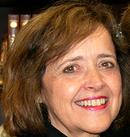
A native of Massachusetts, Sophia Bar-Lev divides her time between the Fort Worth, Texas area and Israel. A former school teacher and adult education lecturer, Bar-Lev now devotes the majority of her time to writing. Sophia Bar-Lev is also the author of
Pasta, Poppy Fields, and Pearls and
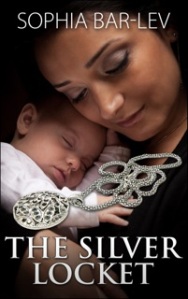
Pizza and Promises. The Silver Locket is her latest novel.
Connect with the author on the web:
Q: Congratulations on the release of your latest book, THE SILVER LOCKET. To begin with, can you gives us a brief summary of what the story is about and what compelled you to write it?
A: This novel is celebrates the triumph of the human spirit over tragedy and heartache. It chronicles the lives of two women whose lives are linked by a child that belongs to both of them but in different ways. Their common devotion to motherhood and family ultimately leads to a powerful and fulfilling reunion. The power of a sensitive and difficult decision years earlier is realized as two families join their hearts and lives because of one special daughter they share. My inspiration came from the true story of a friend who wanted her story told and was delighted that I would write it for her.
Q: What do you think makes a good contemporary novel? Could you narrow it down to the three most important elements? Is it even possible to narrow it down?
A: A novel doesn’t deny reality; it interprets reality. The novels I appreciate and enjoy reading relates to the contemporary reader in a way that adds value to his/her life. This what I endeavor to do in my writing. The importance of character development cannot be overstated. Imagination must blend seamlessly with realism to produce for the reader a sense of connection or identification with the personalities in the book.
Q: How did you go about plotting your story? Or did you discover it as you worked on the book?
A: In the case of THE SILVER LOCKET, I knew the basic story ahead of time so my primary task was to follow the real life plot as told to me by my friend. However, in my other novels, I start with an idea which morphs into an overview but as I write, very often the characters pull me into directions I didn’t anticipate when I started the project. Personally, I’ve never outlined a book ahead of time. I tend to write more spontaneously and, as they say, ‘go with the flow’.
 Q: Tell us something interesting about your protagonist and how you developed him or her. Did you do any character interviews or sketches prior to the actual writing?
A: For this novel I invested considerable time in learning everything I could about the two women who are the primary characters throughout the novel. My friend’s descriptions and insights into her birth mother and adopted mother were very helpful and gave me a solid basis for building the narrative. Yes, I did write up two character interviews while I was writing the book and later revised them after the book was finished. I found the practice very helpful not only for this novel but for my other novels as well.
Q: In the same light, how did you create your antagonist or villain? What steps did you take to make him or her realistic?
A: This took a bit more imagination than the development of the protagonists. Actual information about this person was sketchy so I did some research into the general traits of the kind of person he needed to be in the story and received some advice from a local police officer as well, not only regarding the criminal but also about the types of laws applicable at the time.
Q: How did you keep your narrative exciting throughout the novel? Could you offer some practical, specific tips?
A: To keep a reader turning the pages requires enough mystery or suspense to create continual curiosity. As a writer moves through the chapters, unexpected twists to the story act like bait to ‘hook’ the reader to keep going. In this novel, I inserted events and conversations at strategic intervals to create or increase the suspense and add depth to the story.
Q: Setting is also quite important and in many cases it becomes like a character itself. What tools of the trade did you use in your writing to bring the setting to life?
A: Descriptions must be written in such a way that the reader can paint a picture in his/her mind of the various settings in the course of the novel. Carefully chosen words, similies, analogies and references will all contribute to dynamic settings so that – in a manner of speaking – the book becomes a movie in the mind of the reader.
Q: Did you know the theme(s) of your novel from the start or is this something you discovered after completing the first draft? Is this theme(s) recurrent in your other work?
A: In this case, yes I knew the theme from the beginning. In my other novels, I had a general idea but the themes developed as I wrote so that by the time I completed each novel, the theme was clear and distinct.
Q: Where does craft end and art begin? Do you think editing can destroy the initial creative thrust of an author?
A: Craft and art – art and craft: which comes first? Hard to say. I think the most successful novel is the result of free-flowing ‘art’ or creativity, which is later reviewed, revised and edited so that the level of the craft enhances the art contained within the novel itself.
Q: What three things, in your opinion, make a successful novelist?
A: Persistence, diligence and a passion for excellence are imperative for any writer to become a successful novelist. Actually, I think these three qualities are essential for success in any area of life but as we’re discussing authors, I would add that every author has to be willing to throw away as much or more than they actually publish. Writing is a ‘practice’ as well as an art. I write every day and much of it ends up in the dust bin but it’s not wasted time; it’s practice and practice makes perfect.
Q: A famous writer once wrote that being an author is like having to do homework for the rest of your life. What do you think about that?
A: I love writing so if this is homework for the rest of my life, bring it on! I’m a firm believer in the maxim that if you love what you do, you won’t ‘work’ for the rest of your life. Your ‘work’ becomes your joy.
Q: Are there any resources, books, workshops or sites about craft that you’ve found helpful during your writing career?
A: Yes I regularly read postings from Writers’ Digest and subscribe to their magazine as well. I attend writers’ workshops as often as I can and read books about writing. I found Stephen King’s book, ON WRITING and BIRD BY BIRD by Anne Lamott helpful and inspiring. I’m also a great fan of the series of books for writers by Julia Cameron. Her works continue to be a resource I go back to frequently.
Q: Is there anything else you’d like to share with my readers about the craft of writing?
A: I have a small book on my desk which a friend recently sent me. It’s entitled, YOU’RE A WRITER SO ACT LIKE IT. I haven’t read the book yet but I love the title. Anyone who aspires to be a writer needs to put in the time to develop the skills that a creative imagination requires in order to marry ideas to effective expression. I daresay there are many potential writers who are not lacking in ideas but in the will and persistence to do the work required to turn their imaginations into printed material. Great ideas are not enough; the mechanical skills for producing a winning manuscript are essential. And that, my friends, takes work.
////////////////////////////////////////////////
Title: THE SILVER LOCKET
Genre: Women’s Fiction
Author: Sophia Bar-Lev
About the Book:
When The Silver Locket opens, it’s July 1941 in Boston, Massachusetts. War is raging in Europe and the Pacific. But for two young women in a small town in New England waging their own personal battles, the struggle is way too close to home.
When extraordinary circumstances bring these two women together, one decision will alter the course of their lives. And with that one decision, their lives will be forever changed…and forever intertwined.
Were these two women thrust together by happenstance—or fate? A tragedy. A decision. A pact. Lives irretrievably changed. A baby girl will grow up in the shadow of a secret that must be kept at all costs. But will this secret ever see the light of day? And what happens when—or if—a promise made must be broken?
Adopting a child is not for the feint of heart—but neither is being adopted…
A sweeping and suspenseful story that unfolds in a different time and a different place, The Silver Locket explores universal themes that ring true even today. Secrets. Unbreakable bonds. The healing power of love. Deception. Anguish. Redemption.
In this touching and tender tale, novelist Sophia Bar-Lev weaves a confident, quietly moving story about adoption, finding hope in the face of hopelessness, and how true love can overcome any obstacle. With its brilliant juxtaposition of the wars fought both on the battlefield and internally, The Silver Locket is a poignant novel, resplendent with drama. Featuring an exceedingly real and relatable plot, and characters that will stay with readers long after the final page is turned, The Silver Locket is a sterling new read.


