Showing posts with label novelist. Show all posts

The Writing Life with Mystery Author Rosie Claverton

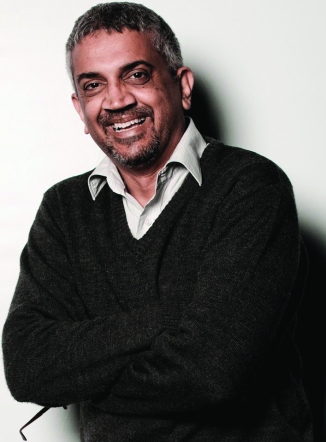
Rosie Claverton grew up in Devon, daughter to a Sri Lankan father and a Norfolk mother, surrounded by folk mythology and surly sheep. She moved to Cardiff to study Medicine and adopted Wales as her home. She then moved to London to specialize in psychiatry. Her first short film Dragon Chasers aired on BBC Wales in Autumn 2012. She co-wrote the ground-breaking series of short films The Underwater Realm.  Between writing and practicing medicine, she blogs about psychiatry and psychology for writers in her Freudian Script series.


What’s inside the mind of a mystery author?

It's not all bodies and conspiracies, honest! Though I confess I'm always on high-alert for story ideas. I clip articles to my Evernote app, I take pictures of weird signs, and I have the Google search history of a mass-murderer. But it's mostly tea and hedgehogs really.

What is so great about being an author?

You get to share the strange parts of your brain with other people! When they say they liked the story you told them, that is the best feeling in the world.

When do you hate it?

When I have to let the book go and let my publisher do their thing. It's a frustrating, anxious time – you know you've written the best book you could've written (hopefully), but how it finds its readers is then mostly out of your hands.

What is a regular writing day like for you?

When I have the luxury of a whole day of writing, I write in 25-minute bursts with 5-minute breaks, which is known as the Pomodoro technique. It also works quite well for editing, but isn't as good for the early plot stages. However, I'm usually writing bits and pieces in the evenings to eventually make up the whole.

Do you think authors have big egos? Do you?

Most writers I know are very insecure about their work. There's a psychological term called “imposter syndrome”, where you think you're a fraud and are waiting for people to find out you're just faking it. I get that and I have many writer friends who also feel this way. I heard JK Rowling speak on relaunching as Robert Galbraith, and how she had the same feelings. I'm not sure it ever goes away. That said, after writing a few books, I feel have some sense of when the writing is going well or not – but that's all!

How do you handle negative reviews?

I read them but I don't respond or acknowledge them. They're often either a matter of opinion or a legitimate criticism of the content. Review spaces are primarily for readers, not authors.

How do you handle positive reviews?

I love reading them – and I save the best for future blurbs! However, I only acknowledge them if they're written by a friend or a reviewer I know well. Again, that's not my place to intrude.

What is the usual response when you tell a new acquaintance that you’re an author?

I try to avoid it! People either think I'm earning a bucketload of cash or plotting their murder. However, my day job is as a psychiatrist, so I usually avoid talking about that too – for pretty much the same reasons!

What do you do on those days you don’t feel like writing? Do you force it or take a break?

If I'm on a deadline, it has to get done. Sometimes those reluctant, pressure-cooker moments produce some of my best writing. Sometimes it does take a few paragraphs to get into it, and those will need a hard edit later. The only exceptions are when I'm unwell or too tired to focus, because self-care is more important than writing.

Any writing quirks?

I prefer to write at my bureau with my laptop, but I can write anywhere – in fact, I do my best work on a train! In my writer's voice, I have a serious problem with hyphens, the Oxford comma, and sentence fragments. I try to pare them down in the edit, but it's also what completes my style.

What would you do if people around you didn’t take your writing seriously or see it as a hobby?

I find that people go one of two ways – they think it's just a hobby, or they think I earn a fortune from it. I just try to answer their questions honestly at the time, and then chat with my writer friends later. It helps to have a social community that understands the same struggles you have with your craft.

Some authors seem to have a love-hate relationship to writing. Can you relate?

I enjoy it 90% of the time, to be honest. The other 10% is remembering it's a job for which I get paid, so that's why it feels like work.

Do you think success as an author must be linked to money?

Nope. I know a number of name-recognisable authors who have day jobs. My goal as a writer is not to write full-time, but to reach readers who will enjoy my books.

What had writing taught you?

We learn more about ourselves through writing. There is always something of the author in every book they write. My writing tends to deal with issues around identity, which is a topic that fascinates me in my own life. Writing is a reflection of the author.

Leave us with some words of wisdom.

If you write, you're a writer. Own it, embrace it, even if your writing never leaves your laptop.


////////////////////////////////////

Title: Captcha Thief (The Amy Lane Mysteries #3)
Genre: Mystery
Author: Rosie Claverton
Publisher: Crime Scene Books

About the Book:

Agoraphobic hacker Amy Lane is recovering from her last case when her ex-con assistant Jason Carr finds a new crime to solve – a murdered security guard at the National Museum of Wales and a stolen Impressionist painting worth millions.

Ice-cold National Crime Agency investigator Frieda Haas is on the trail of the missing painting and charms Jason into following her to North Wales. He abandons Amy for new thrills, driving her to desperate measures to keep her panic under control and to stay on the track of the killer.

Nothing in this case is what it seems and Amy’s investigation takes her and Jason down a dangerous path – playing games with a murderer.

Guest post: "Why I Love Research," by Vasudev Murthy, author of 'SHERLOCK HOLMES, The Missing Years: Timbuktu'

The one good thing about growing older is that you discover how phenomenally ignorant you’ve been all the preceding  years.

I no longer care for degrees and formal education. Now, it’s the process of learning for its own sake.  Tastes and interests do change over time. The same areas of knowledge that seemed so absurd and pointless seem to shimmer with esoteric and wonderful information. I can make very sincere and determined efforts to learn and be enlightened.

I’ve written a number of books and I can say that the ones I have a particular soft spot for are those where I had to make efforts to learn something new to make the story even more believable. The two Sherlock Holmes, the Missing Years books, Japan and Timbuktu, are examples of where I had a chance to apply that new found zeal to learn, learn and learn.

What I really like to do is find out what might have happened at different parts of the world during the same period. Once, an event could happen in a region and no one might know about it even a thousand miles away till several weeks or months later. In other words, the rate of influence took much longer that our current instant appreciation of events that may happen anywhere in the world. That means, cultures had a better chance to blossom in a somewhat insular way, with the occasional flavour of a new language or religion or cuisine mysteriously showing up. Those days are over now, and technology has started creating homogeneity, though it may still take several decades. But the heterogeneity of the past and the present make for a collage of fascinating material.

Research in literature to make the plot seem more believable is not new, of course. People like fiction with overlays of facts so that they feel a sense of familiarity and grounding, and can relate to the plot a little better.  Research is oftentimes like Brownian motion, which refers to the random movement of particles; you find one nugget and as you read about it, you discover something else in addition that’s equally interesting. It’s easy to wander away into new areas and ‘waste’ time but who can deny the happiness of discovering things you had no idea about.

The Japan book involved considerable digging into European politics, the Trans Siberian Railways, the ships of the time (1891-94), events in Japan, Korea and China, opium, botany, the art and music of various countries and, of course language.  The Timbuktu book was even more complex – the Vatican, the state of politics in Northern Africa, Timbuktu, the Tuaregs and their astonishing culture, the geography and music of the land, the Sankore Mosque, the situation in the lower Nile (Sudan), the ancient culture of the Meroes. Along the way, I learned about the Cathars and integrated that into the plot. I really didn’t feel like ending the book. Both the books would have seemed much lighter without the integration of colour and context, created by research, both internet and library.

Of course, you can’t have a jumble of incoherent facts thrown into a blender. There has to be an overall plot that is uplifted by the addition of relevant information gleaned from research.  And one must have common sense and know what to red-mark and delete.

Another danger is that of coming across as wide but not deep. That is possible. I view it as an acceptable risk simply because it is not possible to know every single detail and you may alienate the reader with too much. This is where the wisdom of an editor comes in.


Research requires patience, risk taking and lateral thinking. All must work in tandem to reveal strains of thought that can weave beautifully in a core plot. I like it and highly recommend it! 

Find out about his book on Amazon
Vasudev Murthy Final - CMYK
ABOUT THE AUTHOR
Vasudev was born in Delhi and has meandered around the world with lengthy stopovers in Tallahassee and Dallas. His books span a variety of interests, from Indian classical music to crime fiction, humor, and business management. A violinist and animal rights activist, Vasudev lives with his family and five snoring dogs in Bangalore, India where he runs a consulting firm.

Guest post: "Yoga, Writing, and Persevering Practice" by Tracy Weber

If you were to ask novelists why they write, most would readily assert that it’s not for the money. The writers I know would make significantly more money toasting bagels and steaming lattes. Penning a novel is a work of love, or in my case, a work of loves. Karma’s a Killer, like the rest of my Downward Dog Mysteries, combines three of my most ardent passions: German shepherds, yoga, and cozy murder mysteries. Yoga, dogs, and murder—what could be more fun?
Still, slogging through a first draft often feels less like making love, more like walking through hardening cement. When things get tough, I remind myself of one of yoga’s most important principles: persevering practice.
The most well-renowned book of yoga teachings is an ancient text called the Yoga Sutras of Patanjali. According to this text, yoga postures are only one form of persevering practice. Any practice—including yoga poses, breath work, meditation, and for me, writing—helps us find inner peace. But in order to be persevering, a practice must occur:
§  Over a long period of time
§  Without interruption
§  With dedication and enthusiasm
§  With an intention of personal growth
§  Without attachment to results.
Easy, right?
Writing, for me, is no easier. My energy for writing ebbs and flows. Sometimes it’s part of my daily routine; sometimes it falls off my radar for weeks at a time. Sometimes I race to my computer with the joy of a six-year-old schoolgirl with a bright green lollipop; other times I drag myself to the keyboard like a fifty-year-old en route to her first colonoscopy.
And that whole idea of not being attached to the results? Well, let’s just say I could write a second series in the time I spend looking at my Amazon sales rankings.
Still, the persevering practice analogy has meaning. I wrote the first two chapters of my first book, Murder Strikes a Pose, over five years ago. Then I let the manuscript sit, untouched, for almost two years. Until I worked on it daily, I made no progress.  My most meaningful writing days are always the ones in which I explore life’s deepest emotions and my own personal vulnerabilities. And on the days I lack dedication and enthusiasm, my words end up as crumpled pages at the bottom of my recycle bin.
As for attachment to results, well, I have to let that go. Any writer attached to success lasts about three minutes in this business before laughing maniacally, tossing her computer out the window, and popping popcorn over the negative reviews crackling in her fireplace.
So why do I continue? I write because the practice offers me unexpected gifts: flashes of self-understanding, moments of quiet calm, a connection to laughter and joy in this oftentimes challenging life.
Like many authors, my writing practice waxes and wanes, and my hope of reaching the New York Times Bestseller list often seems unattainable. But writing taps into something special. Something I haven’t found in the rest of my life. Simply put, writing feeds me.
So if you need me, I'll be glued to my keyboard—persevering. 

tracy
ABOUT THE AUTHOR
A certified yoga therapist, Trcay Weber is the owner of the award-winning yoga studio, Whole Life Yoga in Seattle, and the creator and director of Whole Life Yoga’s teacher training program which, to date, has certified over 250 yoga teachers. She and her husband live in Seattle with their challenging yet amazing German shepherd Tasha.
Connect on with Tracy on the Web:

The Writing Life with Medical Thriller Author Dr. John Benedict

Pennsylvania native John Benedict graduated cum laude from Rensselaer Polytechnic Institute and entered post-graduate training at Penn State University College of Medicine, where he completed medical school, internship, anesthesia residency and a cardiac anesthesia fellowship. Benedict currently works as an anesthesiologist in a busy private practice in Harrisburg, Pennsylvania.


What’s inside the mind of a medical thriller author?
The cool part about being a medical thriller author is that there are just so many clever ways to kill people in a hospital setting.  Plus there is always lots of drama, big egos and life and death scenarios that play out on a daily basis in the operating room.  This makes for great characters and exciting backdrops for my stories.  Finally, most readers don’t exactly know what takes place in a modern OR, especially when it comes to the anesthesia end of things (where I specialize), so this can add realism and interest to a story.

What is so great about being an author?
The best part of being an author is receiving a glowing review from a reader: loved it, stayed up all night reading it, new favorite author, will definitely read anything by this author, etc.

When do you hate it?
The worst part of being an author is to endure obligatory one-star reviews or rejection letters.

What is a regular writing day like for you?
I like to write in the morning in a quiet place in the library with a large coffee and treat.
I only work for about three hours before I start to lose focus and must tend to work/ family matters.

Do you think authors have big egos? Do you?
Most authors that I know believe their work is good or they would never have made it through all the difficulties and dry-spells writing often brings.  But they also have fragile egos.  They crave praise for their work and can never receive enough.  Most are usually stung by criticism and are thin-skinned.  All of this is true for me.

How do you handle negative reviews?
Poorly.  As I mentioned, most writers that I know tend to be thin-skinned.  It usually takes me a day or two to get over a bad review.  Receiving some very positive reviews is also a great way to counter the haters.  And I remind myself that even the great writers like Stephen King or Dean Koontz all receive roughly 10% minimum abysmal reviews.  You simply can’t please everyone and there’s always a minority fringe that will be happy to trash your work.  If you are getting a majority of 5-star reviews or are selling books, you are winning.

How do you handle positive reviews?
As I mentioned, these are what I live for.  They make my day and help give me the validation I need to write the next book.

What is the usual response when you tell a new acquaintance that you’re an author?
Most people are very interested because I find that the majority of folks feel they would like to write a book too.  They’re looking for some encouragement or how-to tips.  Next on the list is: Are your characters based on real life people?  Who?  Finally, where do you get your ideas for stories?

What do you do on those days you don’t feel like writing? Do you force it or take a break?
No, I don’t force it.  Instead, I gravitate to the marketing end of things.  There are always a million emails to write, blogs to participate in, all in an effort to help get the word out about your books. I also spend time writing back to friends and fans who have written to me about my stories.

Any writing quirks?
When I’m seriously into the plotting of a novel, I like to spread out chapter folders on a big table so I can visualize the time sequences and connections of many different chapters at once.  It’s hard to see the big picture when you’re just viewing one page on your computer screen.

What would you do if people around you didn’t take your writing seriously or see it as a hobby?
I would strive to show them with results that the writing is serious business.  Most people around me can tell by the enormous time investment that goes into writing that it is a serious endeavor.

Some authors seem to have a love-hate relationship to writing. Can you relate? 
Yes, I think it’s tied into the fragile ego concept I spoke of earlier.  When readers like your stuff, you’re on cloud nine and all the work and time spent is forgotten. You bask in the adulation and the praise like they are drugs.  Similarly, when reviews are bad or sales become sluggish, you begin to question everything and can become depressed.  The biggest fear is that you are wasting your time producing rubbish.

Do you think success as an author must be linked to money?
No.  For me the greatest success is getting your books out there in large numbers and pleasing a majority of readers.   

What had writing taught you? 
I’ve learned to believe in myself even when no one else does.  I’ve also learned the power of perseverance.  Finally, I’ve learned that writing a good book is probably less than half the battle.  Getting it published and successfully marketing it may be even more important.

Leave us with some words of wisdom.
Nothing worthwhile in life is quick or easy.  Writing is no different.  Expect to spend a long time learning the craft and improving upon it.  Don’t expect to become famous overnight or make a lot of money easily.  The best advice I can give a would-be novelist is this: You shouldn’t write because you want to make millions or become a household name—you’ll likely be disappointed.
Rather, you should write because you enjoy the process and feel the need to tell a story.  Let the results take care of themselves.

 ////////////////////////////////////

Title: Adrenaline
Genre: medical thriller
Author: John Benedict
Publisher: CreateSpace

About the Book:

When patients start dying unexpectedly in the O.R. at Mercy Hospital, anesthesiologist Doug Landry finds himself the focus of the blame. Is he really incompetent or is there something more sinister going on? As Doug struggles to clear his name and unravel the secret of the mysterious deaths, it becomes clear that someone will stop at nothing to keep him from exposing the devastating truth. Doug becomes trapped in a grisly race against time to prevent more deaths—including his own.

From the boardroom to the recovery room to the thrilling climax in the operating room, ADRENALINE is a heart-pounding, adrenaline rush of suspense, action and intrigue in an extremely realistic setting. If you like the novels of Robin Cook and Tess Gerritsen, ADRENALINE will leave you breathless.


Fantasy Author Jane Tesh Lists her Five Favorite Books

Only five?  I have lots of favorites! A tough assignment, but here goes.
            Terry Prachett is my favorite author, and Going Postal is my favorite of his many novels set in his imaginary Discworld, an alternate universe created by Sir Terry to spoof human foolishness.  In Going Postal, a con man, given a second chance, must save the derelict postal service of Ank-Morpork.  There is romance, true danger, and an amazing satire on computers.  I am in awe of the way that Pratchett can mix comedy, drama, humor, and pathos all in one book.  That’s what I strive for in my own novels.
            Georgette Heyer is known as the creator of the Regency romance genre.  Her witty dialog and intricate plots take comedy of errors to the next level.  In my favorite book, The Foundling, the young Duke of Sale escapes his overprotective household, has adventures, and proves himself.  Heyer handles her many characters very skillfully, and I appreciate her dry and subtle comments on their foibles.
            I discovered Dorothy Sayers in my college library and became very fond of her hero detective, Lord Peter Wimsey, especially in Murder Must Advertize.  In this adventure, Lord Peter goes undercover in an advertizing agency to solve the murder of one of the employees.  I was immediately drawn into the world of upper class bon vivant Wimsey.  Again, I love dialogue, and Lord Peter never stops talking.
 Jasper Fforde is an author whose work defies description.  Mystery, fantasy, time travel, and delightful humor and invention are only a few of the things you can find in his many novels.  My favorite is The Big Over Easy.  Jack Spratt and Mary Mary of the Nursery Crime Division investigate the death of Humpty Dumpty.  Did he fall or was he pushed?  Add the evil Goliath Corporation, friendly aliens, and the All of Fforde’s books, including the Thursday Next series, and the amazing Shades of Grey (not to be confused with Fifty Shades of Gray!), in which the characters’ social status depends on what color they can see, are filled with enough literary references, wordplay, and dazzling imagination to please any English major, including myself. 
            And finally, The Fantastic Flying Books of Mr. Morris Lessmore, by William Joyce, illustrated by William Joyce and Joe Bluhm.  As a former elementary school librarian, I love picture books, and even though I’m retired, I still like to read them.  It’s been a long time since a book affected me so.  Morris Lessmore’s house and all his books are blown away in a storm, and a cheerful book invites him to come live with him and hundreds of other little living books.  The pictures are evocative and amusing, and the story made me cry.  So that’s a good book!
//////////////////////////////////  
         
Jane Tesh is a retired media specialist and pianist for the Andy Griffith Playhouse in Mt. Airy, NC, the real Mayberry. She is the author of the Madeline Maclin Series, A Case of Imagination, A Hard Bargain, A Little Learning, and A Bad Reputation, featuring former beauty queen, Madeline “Mac” Maclin and her con man husband, Jerry Fairweather.  Stolen Hearts is the first in the Grace Street Mystery Series, featuring PI David Randall, his psychic friend, Camden, Randall’s love interest, Kary Ingram, and Cam’s career-driven girlfriend, Ellin Belton, as well as an ever-changing assortment of Cam’s tenants.  Mixed Signals is the second in the series, followed by Now You See It and Just You Wait. Jane’s mysteries are all published by Poisoned Pen Press, located in Scottsdale, Arizona. Butterfly Waltz is her first published fantasy novel from Silver Leaf Books. All of Jane’s books are on the light side with humor and romance. 

Visit Jane’s website at www.janetesh.com and her Facebook page, www.facebook.com/GraceStreetMysterySeries.  You can also find her on Goodreads, Amazon’s Author Central www.amazon.com/author/janetesh, and www.twitter.com/janetesh.


Tips for Writing Fiction from Jim Bailey, Author of 'The End of Healing"

After studying the great books at St. John’s College I dreamed of writing the next great American novel. I enrolled in a graduate writing program, where my fiction-writing teacher told me to write about what I knew. At that point I didn’t seem know much of anything, and medical school seemed like the easier option. Twenty years later, I started writing The End of Healing as a work of narrative non-fiction. When my spouse, who is also my editor, told me I was writing fiction—and suggested I’d better stop because it would take me forever—my first reaction was denial. I assured her that I was, in fact, writing creative non-fiction. As usual, though, she was right. It was over a full year later, in 2004, I realized that I was writing fiction—and that filled me with terror.  I couldn’t write fiction. That had already been determined. But despite my despair, The End of Healing was a compulsion for me, and I wrote nearly every day from 2004 until its publication. I wrote and wrote and edited and edited and learned the art of story telling over the last ten years because I had to do so. The story needed to be told. So what are the main things I have learned about the writing process over last ten years of writing my first novel that might be helpful to others who have a story they need to share?

  1. Start with stream of consciousness, but early in your writing process imagine the final product and the broader story arc to help you channel the stream.

  1. Allow your characters to reveal themselves to you over time and let them shape and even change the arc of your story.

  1. Write wherever and whenever inspiration strikes you, but also have a regular (daily) writing schedule, time, and place, even it is brief.

  1. Don’t be afraid to write a story with a purpose, goal, or a reason for telling. In writing, as in life, it helps to have a reason for writing.


  1. Make sure your story is one that you really care about in order to have the staying power to see it through to its end. Look for the story that matters most in your life. That is the story you should aim to share.
/////////////////////////////

Title: The End of Healing
Genre: Suspense
Author: Dr. Jim Bailey
Publisher: The Healthy City
Purchase on Amazon
SUMMARY:  
Dr. Don Newman, a resident physician at the renowned University Hospital, awakens in a windowless call room in the middle of the night to the screams of his pager. As he runs to a dark ward to attend to a dying woman strapped to a bed, Don realizes that despite having worked long and hard to become a doctor—and having sworn to do no harm—harm has become his business.
So begins Dr. Newman’s quest to become a healer in a system that puts profits ahead of patients. Abandoning his plans to become a cardiologist, Dr. Newman enrolls in an Ivy League graduate program in health system science, where an unorthodox professor promises to guide him ever deeper into the dark secrets of the healthcare industry. Along with fellow students Frances Hunt, a sharp and alluring nurse practitioner, and Bruce Markum, a cocky, well-connected surgeon, Dr. Newman begins a journey into the medical underworld.
When Dr. Newman unearths evidence of a conspiracy stretching from the halls of Congress to Wall Street and even to his small campus, his harmless course of study becomes deadly serious. Will he be silenced? Or will he find a way to save his patients and others from needless torture? One thing is certain:  the path to healing is fraught with danger. Will this path lead Don to a dead end?
Jim Bailey Author Photo
About the Author:
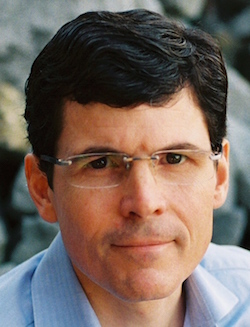
Jim Bailey is a fellow in the American College of Physicians and professor of medicine and preventive medicine at the University of Tennessee Health Science Center in Memphis, where he directs the Center for Health Systems Improvement, cares for the sick, and teaches doctors in training. His research appears in many peer-reviewed medical journals, including AMAJournal of General Internal Medicine, and Annals of Internal Medicine. Dr. Bailey has an abiding passion for the classics, medical history, and ethics, and believes that sharing our stories can heal.The End of Healingis his first novel.