Showing posts with label humor. Show all posts

Guest post by Jonisha Rios, Author of 'Curse of the Blue Vagina'


Hi all!  I’m a Puerto Rican Latina from the Bronx, not to be confused with the fabulous Jlo although we do share the same size ass.  Very proud of that, can I get “woot woot”!
Okay okay, I’m not actually from the Bronx originally but I did live there for over ten years before I moved to Cali and my name is Jonisha Rios.

 I’m thrilled to be sharing some words of wisdom on my journey from the stage to becoming a published author.   Some would say I did this process backwards. In other words, many writers first have their material in book form before they proceed to have it staged or even filmed. However, for me there was no other way. You see my goal was to have the experience of living these stories and producing them for the stage first.  And in some cases even directing them, and then once I did that, I believed the book would naturally follow.   I took to the stage worked out my material and then, chiseled it into what became “Curse of the Blue Vagina” A collection of two solo-shows transformed into narratives, followed by an ensemble piece I produced and directed. I never set out to “get published” or even “find an agent”, in fact- they found me after I decided to just do it on my own.

When I began this journey almost ten plus years go, I was traveling back and forth from the east coast to the west coast doing show after show and just working to make each one better.  It was my art, my expression. I did it for me and it was a bonus that people came to watch and many enjoyed my pieces. 

If I were to give any advice it would be “If you build it, they will come.” True, you may have heard this old saying time again- only in my case it was exactly what I did.  I was never one to wait for anyone to “open my doors.” So many people out there are waiting for their “Big Break”. But its bullshit, you can’t wait.  If you really want to act, learn how to write and write yourself something. Or hire me to help you.   

I remember I was shooting a movie in Italy and one of the actresses scoffed at me when she read the beginnings of my works that eventually became the material I used for my book. She said “Oh you do stand up? And solo-shows? You aren’t a talent.” Mind you I was starring in the movie she helped me get a role in. It was so odd.  I will never forget how rude she was. But I didn’t let her get me down, because I was clear.  So rule number: Be Clear about your gift and don’t allow anyone to bring you down, what they think of you and is not your concern, its their problem.  Stay focused. Thank God I felt sorry for her and kept on going. A few years later not only did my shows become successful, but I landed two TV series, sold a screenplay, directed countless commercials and was paid big bucks to help others create their own solo-shows.  And that same girl eventually reached out to me for advice later on.  No hard feelings, glad I inspired her. My point is, I knew where I was headed and didn’t let anything or anyone stop me.

To be clear, I didn’t do it to prove the haters wrong – and that’s a very important message from me to you. Do it because you love it and what you create is your passion. Period. No one can stop you from doing what you are meant to do, because if you are destined to do it. 

They say it’s always important to do that which makes you afraid. And for me that thing was stand up comedy.  In fact before I took the stage as a stand up comedian I actually did solo shows first to be able to conquer that fear. It was difficult to go from elaborate monologues to short set up punches –but I did it.  Was it easy? —Hell to the no! But I did it.  So do what scares you. Create your bucket list.
Now that I’m a mom and a little older wiser, I have really taken to writing.  No need to be on stage anymore.  I conquered that fear and moved on.  Don’t get me wrong I wouldn’t necessarily turn down a role on Broadway; however, I am at peace with writing and creating new stories with characters that make me laugh. 

Ok enough with the inspirational pep talk, here are some hardcore rules.  Hire a book formatter ASAP.  For me formatting was an absolute nightmare that took way longer than it needed to.  Mainly because I wrote my book in "Word" which apparently is a pain to format.  The thing is, once I got the book formatted properly, errors jumped out at me that I never noticed after having the book copy edited several times.  I was shocked and annoyed and it was a very expensive process to fix.  So when your manuscript is complete have it checked several times by many different people  for 1) grammar, 2) spelling, 3) spacing, 4) indents—the works- get it proofed for everything again and again before you get into formatting so that when you convert the file you don’t need to fix a thing.  I tell you this because the formatters will make errors – so long as its theirs and not yours those are easy to find and free to fix.

Get professional photos taken, I had nothing because after I had given birth my focus was my son and at almost 200 pounds going from a sassy size 2 to a 10 plus… meat I didn’t want to take photos and frankly I didn’t care – being a mom was a dream just like being an artist was so I was fine with my weight.  The thing is I had no pro shots. So the photo I used in the back of my book, although I love it, it was a photo shoot from when my baby was teeny.  Hey it worked but now I need to do a photo shoot to get some new press photos - be prepared.

Have different readers read your stories.  Meaning don’t just go to readers that are your typical audience branch out, the notes I received from so many different people early on was invaluable because they were all from completely different walks of life and had different perspectives. 

Finally, once your have proofed and had others read your stories and once you feel the project is done-- move on.  Tell people who have more things to say or more notes to give “Thanks but this book is officially done, but I so appreciate your advice and will consider it for my next book.” This is so important, why? Because you are an artist and because as a writer especially a self-pub writer, you can write and re-write to death.  Believe me this book took 8 years to complete.  Yup, you heard that, 8 years! And it’s a collection of stories.  Don’t do that to yourself.  You want to put your best foot forward, and you also want to appreciate the fact that you have more stories in you – new ones that need to be told.  So when its time to let that go- let it go.  I for one will not be reading my own book again.  I did it, I read it I will produce plays from it but I have moved on.

Anyway, that’s all I got.  My son is finally asleep so that means, I get to have a glass of wine and just chill.  Goodnight! Read my book! Thanks for your support.

ABOUT THE AUTHOR


Jonisha Rios is an accomplished screenwriter, author, director and actress that currently resides in California. She teaches Solo-show workshops to adults and kids. 

Check her book on www.CurseoftheBlueVagina.com 

Guest post: "Why I Love Research," by Vasudev Murthy, author of 'SHERLOCK HOLMES, The Missing Years: Timbuktu'

The one good thing about growing older is that you discover how phenomenally ignorant you’ve been all the preceding  years.

I no longer care for degrees and formal education. Now, it’s the process of learning for its own sake.  Tastes and interests do change over time. The same areas of knowledge that seemed so absurd and pointless seem to shimmer with esoteric and wonderful information. I can make very sincere and determined efforts to learn and be enlightened.

I’ve written a number of books and I can say that the ones I have a particular soft spot for are those where I had to make efforts to learn something new to make the story even more believable. The two Sherlock Holmes, the Missing Years books, Japan and Timbuktu, are examples of where I had a chance to apply that new found zeal to learn, learn and learn.

What I really like to do is find out what might have happened at different parts of the world during the same period. Once, an event could happen in a region and no one might know about it even a thousand miles away till several weeks or months later. In other words, the rate of influence took much longer that our current instant appreciation of events that may happen anywhere in the world. That means, cultures had a better chance to blossom in a somewhat insular way, with the occasional flavour of a new language or religion or cuisine mysteriously showing up. Those days are over now, and technology has started creating homogeneity, though it may still take several decades. But the heterogeneity of the past and the present make for a collage of fascinating material.

Research in literature to make the plot seem more believable is not new, of course. People like fiction with overlays of facts so that they feel a sense of familiarity and grounding, and can relate to the plot a little better.  Research is oftentimes like Brownian motion, which refers to the random movement of particles; you find one nugget and as you read about it, you discover something else in addition that’s equally interesting. It’s easy to wander away into new areas and ‘waste’ time but who can deny the happiness of discovering things you had no idea about.

The Japan book involved considerable digging into European politics, the Trans Siberian Railways, the ships of the time (1891-94), events in Japan, Korea and China, opium, botany, the art and music of various countries and, of course language.  The Timbuktu book was even more complex – the Vatican, the state of politics in Northern Africa, Timbuktu, the Tuaregs and their astonishing culture, the geography and music of the land, the Sankore Mosque, the situation in the lower Nile (Sudan), the ancient culture of the Meroes. Along the way, I learned about the Cathars and integrated that into the plot. I really didn’t feel like ending the book. Both the books would have seemed much lighter without the integration of colour and context, created by research, both internet and library.

Of course, you can’t have a jumble of incoherent facts thrown into a blender. There has to be an overall plot that is uplifted by the addition of relevant information gleaned from research.  And one must have common sense and know what to red-mark and delete.

Another danger is that of coming across as wide but not deep. That is possible. I view it as an acceptable risk simply because it is not possible to know every single detail and you may alienate the reader with too much. This is where the wisdom of an editor comes in.


Research requires patience, risk taking and lateral thinking. All must work in tandem to reveal strains of thought that can weave beautifully in a core plot. I like it and highly recommend it! 

Find out about his book on Amazon
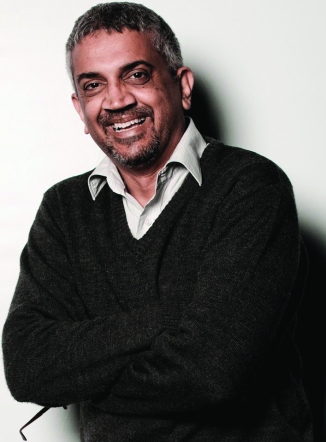
Vasudev Murthy Final - CMYK
ABOUT THE AUTHOR
Vasudev was born in Delhi and has meandered around the world with lengthy stopovers in Tallahassee and Dallas. His books span a variety of interests, from Indian classical music to crime fiction, humor, and business management. A violinist and animal rights activist, Vasudev lives with his family and five snoring dogs in Bangalore, India where he runs a consulting firm.

Profile: Author Barry Hornig

Were you on line at Studio 54? Did you ever swap drugs for gold in Tangiers? Or try on a dog collar at the Botany Club? Ever marry a countess or a Playboy playmate? Meet Barry. He did all of that and a lot more. He’s had many ups and downs and has probably forgotten more than you’ve fantasized, but this book is what he can recall…
“I hope I left a roadmap and some signposts to show other people that when they get lost, there is a way out."
Thus goes the pitch of Barry Hornig’s candid, compelling, revealing, and ultimately inspiring memoir, Without a Net: a True Tales of Prison, Penthouses, and Playmates (Köehler Books, 2015), which, from idea to polished manuscript, took him eight years to complete.
“Without a Net is the story of a young man from a middle class background who shoots for the stars and goes after things that aren’t attainable, and when he thinks he has them, they get taken away,” states Hornig. “In the process, he winds up incarcerated, threatened with guns, and succumbs to addictions, but through a powerful series of visualizations he manages to manifest somebody who helps him change his whole life around through love and compassion. And through that, he is able to help other people.” Hornig’s over-the-top life is told with honesty, self-mockery, hope, and more than a little Jewish humor.
The decision to write this memoir came about from Hornig’s anger about his great ups and downs in life and the question, “Why do they continue to happen to me?” He needed to get it out of his system. Through writing, he hoped to see life more clearly and get rid of some of the anger and pain. He decided he wouldn’t misdirect his energy by looking back, but instead concentrate on looking forward and benefit from lessons learned, and it worked. “I hope I left a roadmap and some signposts to show other people that when they get lost, there is a way out,” says Hornig. “I believe that with determination, visualization, and the right partner, you can emerge from any darkness, live an interesting and fruitful life, and recover your sanity and your spiritual balance.”
In addition to his personal journey, the book offers a kaleidoscope of America from its triumphant and proud years in the 50s to a more recent time when – from Hornig’s perspective – “A great power has been shamefully falling apart. We’ve killed all our heroes, and there’s nobody to look up to. Violence never wins. And Gordon Gekko was wrong; greed is not good. (Sorry, Oliver.)”
Writing Without a Net had its challenges. From telling the truth, to stirring the hot coals, to old temptations re-awakening, to unsupportive peers telling him he was wasting his time and would never finish the book, Hornig admirably stuck to his vision through it all and came through the other side with a completed manuscript and a renewed sense of reality.
Besides the obvious painful, emotional journey of having to access his troubled past, Hornig’s challenge included the fact that he’s dyslexic. Because of this, he decided to work with Michael Claibourne, who helped him organize his thoughts and Without a Net Coverpen his words. Claibourne loved his life story and had been urging him for quite a while to write it all down.  It seemed just as exciting as any of the screenplays they were working on. “My creative process was a form of channeling with Michael, who acted as interviewer, scribe and psychiatrist,” adds Hornig. “We wrote this memoir from Topanga Canyon to San Miguel de Allende, Mexico, Montana, and New York City. Sometimes lying down and sometimes sitting up.  In person, over the phone, and over the net. It was complex but clear. I tried to be truthful and honest with all the subjects.”
In spite of help from his writing partner, as well as support from his spouse and family, becoming an author has been overwhelming for Hornig, to say the least. “I can’t quite wrap my head around it,” he says. “All I did was tell a story. We’ll see what happens from there, and I’ll leave it up to my audience.” He’s looking forward to sharing some of his experiences in this journey with younger people, and hopes that this book puts him in a venue where he can talk to them. “I want to spread the news: it’s never too late.” He hopes readers will learn from his story and even find themselves in it, and realize that even the most destructive impulses can be overcome. “I have been able to forgive the people who wronged me, and forgive myself for wronging the people that I wronged – both the ones who are dead and the ones who are still alive. And looking back now through the other end of the telescope, it’s all very clear.”
Barry Hornig currently divides his time between Santa Monica, California, and San Miguel de Allende, Mexico, where he owns a gallery of fine art rugs. He is a professional sports fisherman, an expert on the paranormal, has talked with beings from space, had visions in Masar-i-Sharif, has been blessed by Muktananda, and hugged by Ammachi. “I have so many more stories to tell… and they’re not all autobiographical” states the author on what lurks on the horizon. “Screenplays, movies, all with messages. I am hoping that with this book my other story work will be taken seriously. And that in turn the other work will get out and more lessons will be learned.”
Connect with Barry Hornig on the web:
Without a Net is available from Köehler Books, Amazon, B&N, and other online retailers.
My article originally appeared in Blogcritics.