Showing posts with label Dark fantasy. Show all posts

Excerpt from RHIDAUNA, by Paul E. Horsman

The night before his Coming-of-Age, Ghyll and his two friends escape their castle on a clandestine boar hunt that will forever change their lives. The hunt proves a disaster, and with one of them badly wounded, they return just in time to see their island castle destroyed by macabre warriors from a dragon boat, and by flocks of fire-breathing birds. Ghyll's eighteenth birthday turns into a nightmare as they flee into the night.

Now begins an epic journey to find out who is trying to kill them – and most importantly, why?

Fortunately, they can count on the help of new friends, including a sometimes overly enthusiastic fire mage, an inexperienced paladin and a young beastmistress who is also a ferocious mountain lioness. It soon becomes clear that not one but several sorcerers want to kill them. Are those blackrobes really followers of a terrible, long-forgotten organization?

PURCHASE


The Author


Paul E. Horsman (1952) is a Dutch and International Fantasy Author. Born in the sleepy garden village of Bussum, The Netherlands, he now lives in Roosendaal, a town on the Dutch-Belgian border.

He has been a soldier, a salesman, a scoutmaster and from 1995 till his school closed in 2012 a teacher of Dutch as a Second Language and Integration to refugees from all over the globe.

Being unemployed and economically overage, yet still some years away from retirement, he is a full-time writer of epic light fantasy adventures. His books are both published in the Netherlands, and internationally. 


EXCERPT FROM: RHIDAUNA – CHAPTER 14: THE GISTERWOUD

The fog gave no sign of abating. With a sigh, Olle turned around. He thought he saw something moving in front of them. ‘Torril.’
‘What?’
‘Do you see anything?’
Torril peered into the mist. ‘Shapes,’ he said with some hesitation. ‘Shapes in long dresses?’
‘That’s where Bo is!’
They ran to the place where they had spent the night. Three faint white apparitions danced around Bo’s stretcher. ‘Co-me... Cooome...’ they moaned, with voices full of terrible desire. ‘Cooome.’ One of the shadows grabbed Bo’s arm with a transparent claw and started pulling at him.
‘Stop!’ Olle let his sword cut the air with a humming sound.
‘No-oo... Nooo... Cooome...’ The shapes crooned, trying to drag Bo off the stretcher. With a cry, Olle fell upon them, Torril right behind him. To no avail. The weapons of the two Companions didn’t touch the apparitions, as if their forms were made of the fog surrounding them. ‘By Helgran, there’s more of them!’
‘N-o-o-o.... C-o-o-o-m-e... ‘
Soon there were twenty of the apparitions; they swirled around the two who were fighting them in a wild unholy dance. Even with their impressive muscles, Olle and Torril couldn’t touch the ethereal forms and soon they began to weaken. Their breathing grew difficult and their hearts seemed about to burst. Exhausted, Olle sank to his knees and waited for the end. Torril stood beside him, head bowed, leaning upon his axe. The apparitions stretched their greedy hands out to the two Companions. ‘C-o-o-o-m-e.’ The chill of those hands paralyzed their limbs, touched their hearts.
All at once, a huge flash bathed the surroundings in light. Olle smelled the pungent odor that sometimes follows a thunderstorm. When his sight returned, the shapes were gone. In their place, men and women in gray apparel surrounded them.
One of them, a young man of their own age, came forward. He wore a black headband and his hair lay in a ponytail on his back. His lower lip and his ear lobes were pierced with small silver rings, and his face was white like Uwella’s, with jet-black shadows around iris-less eyes. His glance met Olle’s and then looked past him, uninterested. ‘Come,’ he said, cold as an echo of the white shapes.
A woman of middle age, like the young man dressed in a gray leather uniform, held out her hand. ‘Your weapons please.’
‘Who are you?’ Olle’s heart was pounding from the past effort and the pain behind his sternum away took his breath. ‘You saved us.’
 ‘Hand me your weapons,’ the woman repeated.
Olle hesitated, but the drawn swords of the six fighters around him left him no choice. He handed her his weapon, then Torril reluctantly did the same.
Without a word, two of the strangers took Bo’s stretcher and carried him into the woods. The others surrounded Olle and Torril, and led them after the young man with the headband, who had walked away without another glance.

They left the fog behind and soon the sun was shining, the subdued light reflecting in the dewdrops on the leaves. Olle had lost all idea of time before he saw, through the trees, a wooden palisade. A girl in the same armor as their escorts guarded the entrance. She saluted and exchanged some word with the young man with the headband. Then she opened the gate and Olle and Torril stepped inside a ring of elongated wooden huts. One of the buildings stood apart from the others. His bearers carried Bo inside and the door closed behind them. The young man with the headband walked away without looking back. Beyond that first ‘come’, he hadn’t spoken. Before Olle could ask something, hard hands pushed him and Torril into a second, smaller hut. The door slammed shut and they heard a heavy bar fall into place.

Interview with Bobbi JG Weiss, author of Hooked (Dark Fantasy)

Bobbi JG Weiss made her world debut one Christmas morning (cough-mutter-mutter) years ago, and as long as she can remember, she’s wanted to be a writer. Why? She has no idea. Probably a birth defect.

After several boring “normal” jobs, her writing wishes came true — she and her husband/partner David Cody Weiss began to make their living as full-time freelance writers, focusing on Hollywood tie-in merchandise like movie/TV novel adaptations, comics, and other related and often ridiculous products. After 20+ years of this, the “WeissGuys” decided to enter the wild world of self-publishing.

You can find more information about Bobbi, her books, her life, and her weird husband at http://www.weisswriters.com/. She also posts on Twitter, tumblr, Pinterest and Facebook unless her passwords mysteriously stop working and she can’t get on, which seems to happen a lot. Why? She has no idea. Probably computer voodoo.

Connect with Bobbi:


About The Book

He is not Captain Hook.

His name is Jonathan Stuart, and he’s just an ornery post-alcoholic bookstore owner from Pasadena with a mania for fencing and a bad habit of disappointing his girlfriend. He doesn’t want to be in the Neverland, impossibly trapped aboard the Jolly Roger with a horde of greedy stinking pirates. He was tricked there by Peter Pan.

Pan happily invites children to come to his wondrous magical island, but he has to trick adults. No adult in their right mind would go willingly. Adults, you see, don’t have a very good time in the Neverland. The fairies and mermaids are against them. The island itself is against them. Most of all, Peter Pan is against them.

In particular, Peter Pan is against Jonathan Stuart. Why? Jonathan had better figure that out, and he’d better do it fast before his mutating memories insist that, not only does he indeed belong in this nightmarish hell of bloodthirsty children, ticking crocodiles and vengeful boy gods, but he’s never existed anyplace else.

So you see, he’s definitely not Captain Hook.

Well, not yet.


For More Information:


Can you tell us what your book is about?

Hooked is about a man who discovers that his life is not his own, that all the horrible things from his childhood had a specific purpose, and that the purpose is linked to one of the most beloved of all children's stories. It's a dark fantasy/horror, so poor Jonathan Stuart, the hero, is not going to have an easy time of it. For anyone who's ever felt haunted by circumstances, this is your book!


Why did you write your book?

Writing is what I do. I've been a published author for over 20 years (see my full resume at bobbijgweiss.com). And I love creepy stories. I wrote Hooked because the initial idea intrigued me, and as it developed in my head, it felt like a creepy world I wanted to play in. (I was right!)


Can you tell us a little about your main and supporting characters?

The main character is Jonathan Stuart. He's a difficult man, a guy with a terrible temper and mean manners at times, but he knows it and tries to overcome it. He was the victim of severe child abuse, and thus he has trouble with relationships. Actually, he has trouble with everything. He escapes in books (he owns a bookstore) and finds stress relief by perfecting his skills in fencing.

The only good thing in Jon's life is Melanie Forrester, his girlfriend, a professional researcher with an eye for detail and an uncanny ability to sift through Jon's bull to see the truth of him. She can see his inner struggles, and she loves him for it, hoping that one day he might smile more than frown. But he smiles enough to satisfy her... for now.

Melanie brings out Jon's good side, which Jon deeply appreciates. They make a good couple. Perhaps they would even get married, but someone from the Neverland has other plans...


Do you tend to base your characters on real people or are they totally from your imagination?

I create characters both ways. I'll often use an actor or TV/movie character as a physical and personality model, just until my character is developed enough that I start to see the real them. And almost every character I create contains aspects of my own personality and those of other people I know. I don't always do it on purpose — it's just how it seems to work. Maybe it's my version of "write what you know." But I never go far enough that a real person is recognizable.

I initially based Jonathan Stuart's looks on young Christopher Walken, mostly because Walken's smile is brilliant while at the same time his face can so stunningly reveal an inner violence that is a big part of Jon's personality. But Jon developed far beyond Walken as I wrote the novel.

As for Jon's personality, I first based him on my husband, David. David has A.D.D. and was also emotionally abused by his father. You could say that I'm a lot like Melanie in that I admired David when I learned about his past. I could see how he constantly had to deal with it, and how, in his case, that unfortunate struggle actually made him a very good man (wifely squee!). Melanie has a lot of qualities that I have, but she's not based on me.


Are you consciously aware of the plot before you begin a novel or do you discover it as you write?

I have to plot. I have to know what I'm doing and where I'm going. I do most of my major thinking before I ever start writing, and my plot documents can get up to 50 pages or more, depending on the story. Now I'll contradict myself by saying that, if in the act of writing I get an idea or I drift, I'll follow that idea to see where it leads. When a sudden idea gels, I'll go back to my plot doc and revise it to include this new idea.

I'm not good at spur-of-the-moment thinking. I'm the kind of writer who sits for hours without moving, and if I'm interrupted, I get all snippy. I need to dwell in my head to work things out. But for me, that makes the writing process much more fun because I don't have to worry about where I'm going or how. I can pay attention to the moment.

And now I'll contradict myself again by saying that sometimes, though rarely, my process is exactly the opposite of everything I just said above!


Does the setting play a major part in the development of your story?

Heck yeah! Hooked is a story that involves the Neverland! Setting doesn't get more important than that. But the settings in the real world, in Jon's life at the beginning of the book, are also important. He owns and runs a used bookstore and his house is full of books — in other words, he's a man with one foot outside of the real world already. He lives in Pasadena, in Los Angeles, the city ruled by Hollywood and all things superficial. He even has a recurring nightmare that ends up to be more real than his "real" life. In a way, the whole story is about where Jon wants to be versus where he actually is.


Have you suffered from writer’s block and what do you do to get back on track?

I've written books and blogs on this topic. In a nutshell, I believe that writer's block —or what I call Page Fright in my book Writing Is Acting — is just a form of fear: fear of commitment, fear of rejection, fear of failure, fear of embarrassment, fear of something. When you can identify this fear and disarm it, you won't have writer's block.

In my own life, writer's block has mostly been a fear of success. Sounds stupid, doesn't it? But I was constantly told to be obedient and humble and grateful and quiet as a child. A writing career, especially in the self-publishing world, requires just the opposite! You have to be proud of your ideas, you have to pursue them openly, you have to thrust them out into the world and encourage people to buy them. That's not obedience, that's almost a form of arrogance. And it's certainly not quiet. It's very difficult. But ever since I identified my fear of success, I don't have writer's block. In fact, I now have more projects and ideas than I'll ever get to finish!


What do you like the most about being an author?

Seeing my name in print. Yeah, I've got an ego, and I've worked hard to get it this big!


What is the most pivotal point of a writer’s life?

Birth.


What kind of advice would you give other fiction authors?

Don't give up. Have faith in yourself. But also be realistic. Try to look at your writing as it really is. Are you ready to publish? Are you really good enough yet? Or do you need to practice more, read more, learn more, before you leap into the professional business of writing? There are a lot of people out there writing bad stuff because they believe that self-publishing will instantly make them legitimate writers. But writing is a craft, and it must be learned.

If you wanted with all your heart to be a plumber, would you just go out, buy some tools and then start to advertise for work? No, you'd have to learn how to be a plumber first. Writing is just the same. Learn the tools of the trade — spelling, grammar, vocabulary, story structure, character development, plot development, etc. Observe the world closely to see what real people do, how they really act and why (don't rely on TV and movies!). Always look for ways to improve yourself and your work. It's hard to know exactly when you're ready, but if you do these things and get good comments when you give your stories to others for test reads, you might be ready. Then GO FOR IT!

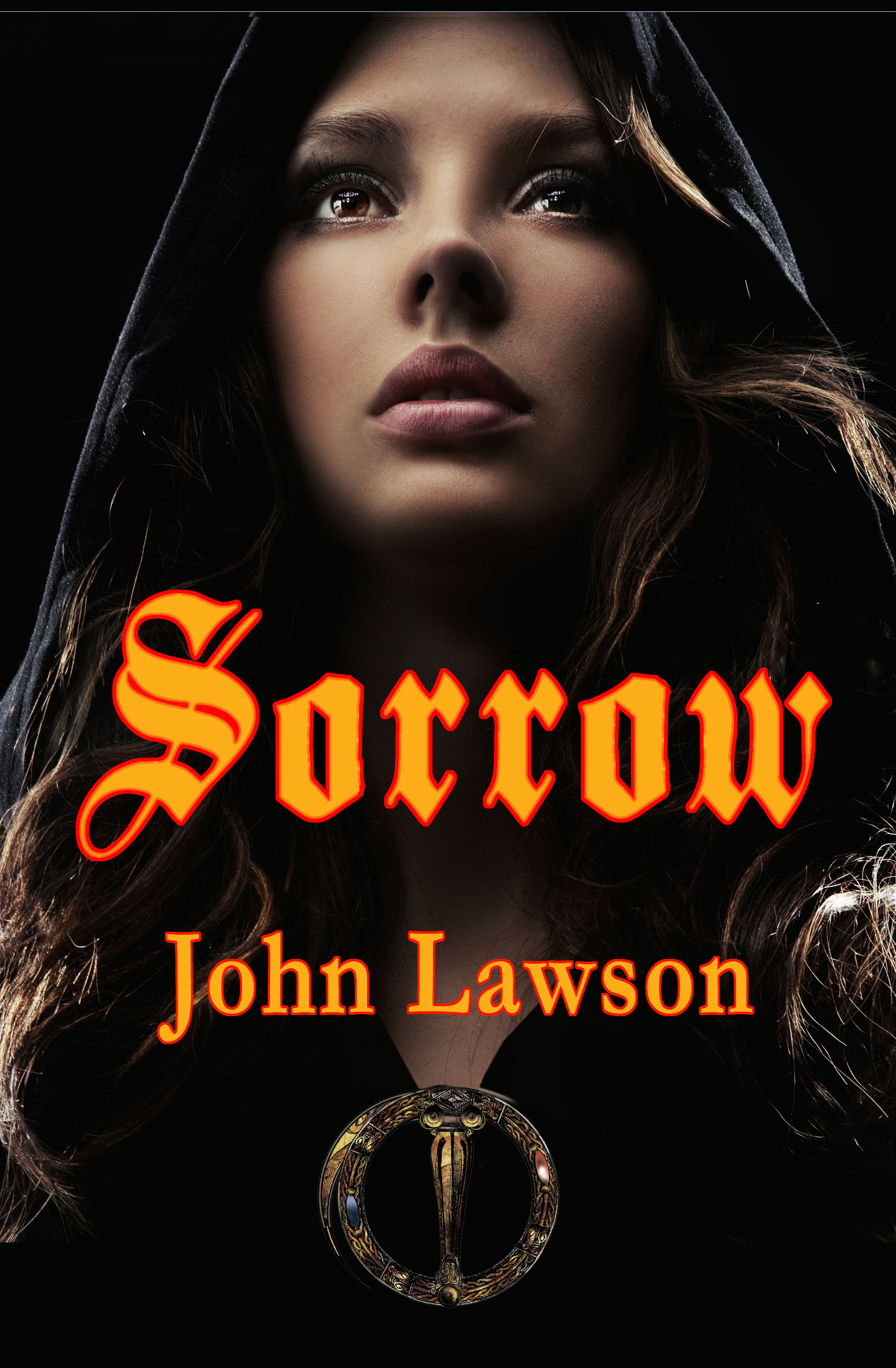
Interview with John Lawson, Author of ‘Sorrow’


IMG_5513John Lawson has been writing for over 30 years, beginning in Junior High with his cartoon strip, evolving into short stories in High School, and dungeon modules for his RPGs in college.  His goal was to write scripts for “Star Trek: The Next Generation,” but upon graduation, reality set it, and he became a technical writer, crafting help and manuals for software developers.  He’s still doing that, by the way, but in-between his job and his family and his video game addiction, he also writes dark fantasy novels about a place called the Seven Kingdoms.
Congratulations on the release of your latest book, Sorrow. When did you start writing and what got you into fantasy?
I began writing in earnest back in 1999.  It was a purely impulsive thing.  I was on vacation, I had nothing to do, so I pulled out a pad of paper and just started writing.  The words just started coming out of me.  Instinctively, I began habits that I continue to this day, keying in on words or events or people that fascinate me and finding ways to worm them into my narrative.
Fantasy was the natural genre for me (considering the subject matter, I think most people would call it Dark Fantasy). Raised on a diet of AD&D as a child, I was drawn to the tales of swords and sorcery and monsters and heroism.  However, I’ve found myself growing impatient with contemporary Epic Fantasy.  I enjoy the rationalism of so-called “hard” Science Fiction, with everything based on legitimate science (or as much so as possible) and as little “magic” as possible.
If I was a braver author (or more educated), I’d write in the Science Fiction genre.   
What is your book about?
Sorrow is a story about a girl, Faina, who is way beyond her depth.  Once privileged, her family has lost its status and wealth, and as a guarantee against their debts, she’s been offered up as something of a marker.  She’s moved into the palace of a strange noble, where she’s watched and well cared for, but nonetheless a prisoner.
She’s a happy, energetic thing, and somewhat to the consternation of her keepers, she ends up bonding with the various servants and other local common folk, all of whom seem to adore her.  (Some of my favorite scenes are of her mixing with her friends and caretakers.)
But then the murders begin to occur — assassinations, really — for these people are living in a tumultuous, religiously volatile time, not unlike our own.  Important people are being killed, and that draws the attention of the duke.  He sends his man to deal with things, and it quickly becomes a contest between two very deadly assassins.  And poor Faina caught in the middle of it.
It is a much different book from my previous book, The Loathly Lady, taking place much later in time.  Instead of swords and torches, Sorrow offers flintlocks and gaslight.  It’s more political intrigue than high fantasy.  More Jason BournethanLord of the Rings.
What was your inspiration for Sorrow?
I wanted to write a coming-of-age story.  So often in entertainment, books, TV, movies, the protagonist in these kinds of stories are boys, so I wanted to diverge off-type somewhat and chose a female lead.  I wanted to try to express events like first love and loss through her perspective.
perf6.000x9.000.inddIn terms of settings, the courts of the EroBernd Empire and Vestiga Gæsi and the intrigue therein were inspired by such movies as “Rob Roy,” “Dangerous Liaisons,” the machinations of families like the Borgias.  In terms of the class struggles, I’ve drawn inspiration from Chaucer, Dickens, Dumas, Hugo, and Twain and contemporary movies such as “City of Men” and “Slumdog Millionaire.”
Did your book require a lot of research?
Yes, indeed.  I’m a compulsive researcher.  As a reader, it really pulls me from the story if some aspect strikes me as implausible or inaccurate, so as an author I do my best to keep things as grounded as possible.  Sure, I have magic and monsters and general fantasy weirdness, but they are realistic enough to the point where I hope the reader might imagine, “Yeah, that could happen.”  Language, culture, religion, ritual are all elements that I thoroughly research.  I keep copious notes and maintain a small encyclopedia of my world in the hopes of maintaining consistency (90% of which, I’m sure I’ll never end up using). 
What do you do when your muse refuses to collaborate?
I don’t sweat it.  I know some authors push through blocks, forcing themselves to write a certain amount of time a day, or a certain number of words.  I’m sure that’s a valid approach, and I’ve done it myself occasionally, but I don’t practice it as a rule.
I’m always thinking about my writing, even when I’m not actually writing.  Always looking for inspirations, jotting down notes, researching interesting words or factoids that I’ve found in other books or movies or TV shows.  I’m often my most productive on the treadmill.  All that cardio sends my mind into a different place.  Little sparks of inspiration come to me.  Alas, it is almost impossible to take coherent notes on my Kindle, so often afterwards I look at what I’ve written and have no idea what means. 
How do you keep your narrative exciting?
I don’t know.  Is my narrative exciting?  I hope it is.  At the very least, I hope it is interesting, surprising, and maybe even shocking.  I try to write the kind of books that I enjoy reading, filled with interesting, intelligent characters in interesting settings.  Often, the mayhem that ensues is a direct result of their interactions.  Some of my favorite scenes have absolutely no action whatsoever.  On the surface, they are merely conversations between people, but more emotion and firepower is exchanged between them than in any battle.  It’s great fun. 
How do you define success?
Creating a story that I enjoyed writing, being able to share it with others, and hopefully, they enjoying it.  I’m not out for money.  I’m not looking for a movie deal or fame or anything.  Just looking to share the stories.  My stories aren’t for everyone.  They’ll never be the next Twilight or Harry Potter, but I figure, with patience, they’ll find their audience.
My interview with the author was originally published in Blogcritics.

Book Review: ‘Sorrow’ by John Lawson


perf6.000x9.000.inddSorrow begins with a mysterious traveler on a mission, secretly carrying a box which contains a precious, powerful weapon.
Then the story moves to Vestiga Gaesi, where we meet Faina, the seductive yet naive fourteen-year old girl with a mysterious past who is staying at the Viscount’s luxurious home — where the story mainly takes place. Then, that night, an important Bishop is murdered, and Lord Ash is called to solve the case. It appears this isn’t the first crime committed against members of the clergy in the past few months. Thus begins his investigation. Soon, he has a suspect: Sorrow. Unfortunately, no one knows who this Sorrow really is, for this killer appears to be a supernatural creature that sheds black tears while killing. Who is Sorrow? Why are victims clergymen? What is Faina’s real identity and why is she in Vestiga Gaesi?
Lawson has created a very real, dark fantasy world that readers will be able to picture vividly in their minds. The descriptions, mood, and dialogue all help bring this story’s detailed world to life. The characters are deftly drawn and come across as genuine people. The prose sparkles with beautifully crafted language. Lawson’s strength lies in characterization and creating an imaginative dark world. I’d like to add that I found the details about religion and the clergy to be very well researched.
There’s an array of interesting characters with equal levels of importance that, together with intriguing twists and turns, will keep readers guessing: Phindol, the unfortunate traveler; Lord Ash, the detective who tries to solve the murder; and, of course, Faina, the alluring Lolita-like protagonist shrouded in mystery who seems to unwillingly seduce all men who set eyes on her. Though the writing is in good taste and there’s nothing graphic, I should mention that some of her scenes with Lord Ash and Phintol, both adult males, might be considered a bit disturbing to sensitive readers.
Sorrow is a standalone novel. However, it takes place in the same world — though hundreds of years apart — as Lawson’s previous novel, The Loathly Lady, also by Dragonwell Publishing.
Recommended for fans of dark fantasy who like a strong touch of mystery.
My review was previously published in Blogcritics Magazine.