Showing posts with label Author Interview. Show all posts

🎤Interview with Giselle Mascarenhas, Author of She Forgot She Was Free #AuthorInterview


Giselle Mascarenhas is the founder of BECOME™, creator of the BECOME Methodology™, and author of She Forgot She Was Free. An entrepreneur, speaker, and transformational guide, she has dedicated her life’s work to helping people reconnect with who they were created to be so they can live with greater purpose, freedom, and intentionality.

After years of building businesses, leading organizations, and walking through seasons of personal growth, Giselle recognized that lasting transformation does not begin with external success, it begins with remembering one’s authentic identity. That realization became the foundation of the BECOME Method™, a proprietary methodology designed to guide individuals through a transformational process of self-awareness, healing, alignment, courageous action, and embodied growth. Unlike a framework that offers guidelines for achieving a specific outcome, The BECOME Method™ is a comprehensive method of personal advancement that can be applied across every area of life, leadership, and purpose.

Her debut book, She Forgot She Was Free, is both a deeply personal memoir and an invitation for readers to embark on their own journey of remembrance. Through honest storytelling, reflection, and faith, the book explores the universal experience of losing ourselves beneath expectations, fear, pain, and performance, and the courageous journey of rediscovering the freedom, identity, and purpose that have always existed within us. Rather than simply telling her story, Giselle invites readers to see themselves in its pages and begin writing the next chapter of their own lives.

The book became the catalyst for the broader BECOME movement, an expanding ecosystem of transformational experiences designed to help people move beyond inspiration into intentional action. Through immersive workshops, retreats, leadership development, educational programs, community experiences, publishing initiatives, and speaking engagements, Giselle equips individuals with practical tools to create meaningful and lasting transformation. Every experience is grounded in the belief that personal growth is not about becoming someone different but remembering and embodying the person God uniquely created each of us to be.

Known for her ability to blend heartfelt storytelling with practical application, Giselle creates spaces where people feel seen, challenged, and empowered to take meaningful action. Her presentations combine vulnerability, strategic thinking, and actionable guidance, allowing audiences to leave not only inspired but equipped with a clear path forward. Her work resonates with entrepreneurs, leaders, professionals, educators, faith-based communities, and individuals seeking deeper purpose and authentic fulfillment.

Beyond her work as an author and speaker, Giselle is passionate about developing leaders who create ripple effects within their families, businesses, organizations, and communities. She believes transformation is contagious, that when one person remembers who they are and chooses to live courageously, they give others permission to do the same. This philosophy continues to shape every initiative within the BECOME movement.

Through future books, collaborative publishing projects, leadership academies, retreats, and global speaking engagements, Giselle’s mission is to help millions of people reconnect with their God-given identity and become the fullest expression of who they were created to be. She envisions BECOME as a worldwide movement that empowers individuals to live intentionally, lead authentically, and create lasting impact for generations to come.

Giselle lives in Texas with her family and continues to write, teach, speak, and expand the global reach of the BECOME movement. Whether on stage, in the pages of a book, or through transformational experiences, her message remains the same: the person you are searching for has never been lost, you have simply forgotten who you are. Remember. Rise. BECOME.

Visit her website at www.thebecomemethod.com.

Connect with her on social media at:

╰┈➤Twitter: https://x.com/giselleempowers

╰┈➤ Facebook: https://www.facebook.com/giselleempowers

╰┈➤Instagram: https://instagram.com/giselleempowers

╰┈➤Goodreads: https://www.goodreads.com/author/show/21957760.Giselle_Mascarenhas


Can you tell us a little about yourself? Are you a full time author?

I am an author, but I wouldn’t call myself a full-time author. I’m a builder.


For most of my life, I have built businesses, developed people, created communities, and taken ideas that existed in someone’s imagination and helped turn them into something real.

Today, I am the founder of The BECOME Method™, and my work is centered around helping women remember who they were before the world told them who they needed to be.

I am also a wife, a mother, a grandmother, and someone who is still very much in her own process of becoming.

She Forgot She Was Free is my first book, but writing it helped me understand that storytelling has always been part of what I do. I just didn’t always use a book to do it.

I don’t think of myself as someone who has arrived and is now teaching everyone else how to get there. I am living this work right alongside the women I serve.

I think that’s important.

BECOME isn’t something I created from a textbook.

I lived it first.

You have been building businesses and leading organizations for years. Would you like to tell us a little bit about that?

Building is probably one of the most natural things I do.

I can see something before it exists.

Throughout my career, I have helped build businesses, brands, communities, programs, movements, and leaders. Most recently, I served as COO of a women’s empowerment organization where I helped develop chapters across the United States and Canada and was preparing for expansion into South America.

And I loved that work.

But there was an unexpected lesson waiting for me inside all of that success.

I had become incredibly good at helping other people build their dreams.

I wasn’t nearly as good at betting on my own.

That realization changed the direction of my life.

I began to see how often I had placed myself behind powerful people, powerful brands, and powerful movements. I could recognize greatness in someone else immediately, develop it, create strategy around it, and help bring it into the world.

But somewhere along the way, I had made myself smaller.

Eventually, God began asking me to take all of that ability I had spent years pouring into everyone else and finally use it to build what He had placed inside me.

That is the season I am in now.

And it has become some of the most meaningful work of my life.

Can you tell us about your latest book,

She Forgot She Was Free: Returning to the Girl You Were Before the World Got Loud?

She Forgot She Was Free is a memoir-style journey back to the girl you were before the world got loud.

It begins with little Gi, the little girl I was before I learned to perform for love, approval, belonging, achievement, or acceptance, and follows the moments in my life when I slowly forgot that I was already whole.

Some of those moments were enormous.

Others would look almost insignificant to someone else.

That’s actually one of the reasons I wrote the book.

We can make lifelong decisions from something that happened in a matter of minutes.

Someone embarrasses you at eight years old and suddenly you decide it isn’t safe to dance.

Someone you love disappoints you and you decide people can’t be trusted.

You experience rejection and decide you need to achieve in order to be valuable.

Then thirty or forty years later, you are still making decisions from a belief you don’t even remember creating.

The book explores my own versions of those moments, not because I believe my story is extraordinary, but because I believe women will recognize pieces of their own stories inside mine.

Ultimately, this book isn’t about becoming a better woman.

It’s about remembering that the woman underneath all those layers was already there.

Can you pick out a passage in your book to share with us?

There are so many passages that mean something to me, but this one holds the heart of the book:

“You do not find yourself.
You return to her.”

And that is really what I want a woman to understand.

We spend so much time searching for ourselves as though we disappeared somewhere.

I don’t believe you disappeared.

I believe life happened.

You adapted. You survived. You achieved. You became responsible. You learned what received approval and what didn’t. You picked up identities that helped you belong.

And underneath all of it, you are still there.

Is this your only book?

For now!

She Forgot She Was Free is my first book, and becoming an author wasn’t something I had mapped out for myself.

In fact, God spent about a year nudging me to write it before I finally listened.

So I’ve learned not to tell God what I’m not going to do next!

What I do know is that the book opened something in me. It showed me the power of using our stories, not to remain inside what happened to us, but to understand what it cultivated within us and then use it to serve someone else.

Whether the next expression of that is another book, an anthology, or something I haven’t imagined yet, I am open.

How can people benefit from reading

She Forgot She Was Free: Returning to the Girl You Were Before the World Got Loud?

I hope they stop trying to fix themselves.

That’s the benefit I want more than anything.

I want a woman to read this book and begin recognizing where today’s decisions may actually be coming from yesterday’s wounds.

Where did you learn to become smaller?

Where did you learn that love had to be earned?

Where did you stop trusting yourself?

Where did someone else’s opinion become your truth?

Where did survival become an identity?

And then I want her to look at all of it with love instead of shame.

Because my message isn’t, “Look at everything that’s wrong with you.”

It’s the opposite.

Look at everything you survived. Look at everything you learned. Look at the woman who is still standing underneath all of it.

You are not almost whole.

You are not working toward wholeness.

You are WHOLE right now.

The work is remembering.

Thank you so much for this interview, Giselle. What’s next for you?

BECOME.

The book helped me understand that what I thought was a personal journey was actually the foundation of my life’s work.

Today I am building BECOME as an ecosystem of experiences designed to help women move from remembering into living.

That includes The BECOME Method™, Dream Labs, BECOME THE CAMP, anthology experiences, methodology development, and other spaces where women can uncover what is theirs and begin building from that truth.

But I’m also trying to stay very present with what God is showing me next.

For most of my life, I thought being powerful meant knowing exactly where I was going.

This season is teaching me something different.

Sometimes power is saying:

“God, show me what is mine.”

And being willing to move when He does.


🎤Interview with Laurel C. Fox Author Braveing the Way #AuthorInterview

Laurel C. Fox was born in Milwaukee, Wisconsin and raised in Aspen, Colorado from the age of nine, through high school. After graduating college with a BA in Liberal Arts, Laurel wound up living in Los Angeles for thirty five years, raising two daughters, and having several careers. Laurel worked for Neil Diamond in the music business for fifteen of those years and traveled the world. Laurel now lives back in Colorado with her husband, John. She works as a voice-over actor and can be heard in many popular television shows such as Lethal Weapon, Angie Tribeca, and Manifest, to name a few. Laurel enjoys being a substitute teacher for the public and private elementary schools in the Roaring Fork Valley. She also sings in a local band, and dabbles on the theater stage whenever she can.

You can visit the author’s web page at www.braveingtheway.com and Instagram at https://instagram.com/laurelcarini.


Why did you write your book?

In 2014 I got a phone call that no parent ever wants to receive. My daughter Taylor was in a horrible accident, and was being transported to the biggest trauma center in Los Angeles.  When I began writing


and digging into an on-line journal everyday, not only to escape the madness, but to also communicate with everyone-- I learned that it was my comfort. Then my comfort and my cathartic writing process slowly became bigger than that and eventually turned into a book.

What kind of message is your book trying to get out?

My message of resilience, tenacity and shear grit is what I hope to give to my readers. That old cliche of needing to breakdown before you can break through is what happens to me during this journey. It’s a story about moving through a trauma with my two daughters, taking you through my own self-reflection while doing that, and being ‘mama bear’ every step of the way. It is not only a beautiful story about maternal sacrifice, it is also about building tenacity, strength and courage through intense struggle. I hope to encourage and bring bravery to people who don’t think they have it.

Is it hard to publish a nonfiction book?

 I found it hard in the sense that it’s a very sensitive subject, trauma —and certain people will be open to my story, and some people won’t. Either way, you just have to move forward and believe in it. 

Have you suffered from writer’s block and what do you do to get back on track?

I suffered more from knowing what this looked like as a book, and sometimes I would put it away for months at a time, because of that unknown. All the while (when I had shelved it) I would still be thinking about it, and when I would sit down again and start writing I was miraculously ready to write more.

Which holiday is your favorite and why?

 Thanksgiving. Hands down. That time of gratitude, no pressure of gifts being given, good food, family, friends and being thankful for life.

If we were to meet for lunch to talk books, where would we go?

 A little quaint cafe for English tea.

What do you like the most about being an author?

 I love being able to share my story of survival after trauma, and I hope to help others because of my story.

What kind of advice would you give other nonfiction authors?

I would say to them, some people will not be open to your story and what you have to say—but the beautiful thing is, it’s yours to tell. So keep doing it and get it out there.


🎤INTERVIEW WITH RAYNELDA GOLDERON AUTHOR OF LITTLE GIANTS: 10 HISPANIC WOMEN WHO MADE HISTORY


Raynelda Calderon grew up in the Dominican Republic, on a healthy diet of romance novels, comic strips, Gabriel Garcia Marquez’s books, and the strict watch of her mother. She has a doctorate in leadership in higher education and works as a public librarian.

As a librarian, working with children inspires her to write about the accomplishments of Hispanics in history. She hopes to inspire young readers to follow their passions.

Raynelda lives in New York with an untamed Shih Tzu, Toby, and a much attached Chihuahua, Maya. She spends her free time thinking (and drafting) about books to write, or painting, crocheting, or crying over abused dogs.

Her latest book is Little Giants: 10 Hispanic Women Who Made History.

You can visit her website at rayneldacalderon.com. Connect with her on Facebook and Instagram.


Can you tell us what your book is about?

“Little Giants: 10 Hispanic Women Who Made History” is a short collection of biographies about Hispanic women and the impact they made in the world. Some of the women featured in this book are iconic figures such as ballet dancer Alicia Alonso; others are less known heroines such as indigenous leader Dolores Cacuango,


founder of the first bilingual school in Ecuador. The book comes with a section of activities that educators, parents and librarians can utilize.

Why did you write your book?

Since I am a librarian and work with children, I was looking for a book about the lives of notable Hispanic women for Women History Month but found none! In finding nothing of the sort, I decided to take on the project of writing one herself. As Hispanic, I think it is important that our children learn about the contributions of our own people through history.

Is it hard to publish a nonfiction book?

I think it is hard to publish any kind of book. The publishing process of fiction and nonfiction is still the same (ISBN, LOC number, etc.). In terms of writing, nonfiction is a lot easier for me! I wrote my first “semi nonfiction autobiography” as I call it, “¿Por qué estoy gorda?” back in 2010. I guess the genre stuck with me.

Have you suffered from writer’s block and what do you do to get back on track?

I have that everyday. It’s like, I get inspired to write at three in the morning, but I am also VERY sleepy… so by the next day my inspiration is gone. Usually I just distract myself with other things (painting, crocheting…) to give my mind a rest. I also take notes of anything that comes to mind to develop it further later on. Other times I just force myself to write and while I’m at it, that block goes away.

What would you do with an extra hour today if you could do anything you wanted?

Ha ha ha! Sleep! (As if I don’t sleep enough already!)


Interview with Christian Nonfiction Author Milton Brasher-Cunningham #interview #blogtour @miltybc


Milton Brasher-Cunningham was born in Texas, grew up in Africa, and has spent the last thirty years in New England and North Carolina. He is an ordained minister in the United Church of Christ, and has worked as a high school English teacher, a professional chef, a trainer for Apple, and is now an editor. He is the author of three books, Keeping the Feast: Metaphors for the MealThis Must Be the Place: Reflections on Home, and his latest, The Color of Together.

He loves the Boston Red Sox, his mini schnauzers, handmade music, and feeding people. He lives in Guilford, Connecticut, with Ginger, his wife, and their three Schnauzers. He writes regularly at donteatalone.com.

WEBSITE & SOCIAL LINKS:

Website: https://www.torchflamebooks.com/milton-brasher-cunningham

Blog: www.donteatalone.com

Twitter: http://www.twitter.com/miltybc

Facebook: http://www.facebook.com/milton.brashercunningham

Goodreads: https://www.goodreads.com/author/show/5863259.Milton_Brasher_Cunningham


About the Book

The Color of Together begins with the primary colors of life–grief, grace, and gratitude–and enlarges the palette to talk about the work of art that is


our life together in these days. The idea for the book began with understanding that grief is not something we get over or work through, but something we learn to move around in–something that colors our lives. Grace is the other given. Gratitude is the response to both that offers the possibility of both healing and hope.

PRAISE

“Locating ourselves in the adventure of life requires reliable tools for exploration. Milton Brasher-Cunningham gives us finely-tuned metaphorical gyroscopes to navigate our way with God, others and even ourselves. The Color of Together will help us find our place again and again along the way.”  ~ Rev. Dr. George A. Mason, President, Faith Commons, Dallas, Texas.

“In his beautiful new book, Milton Brasher-Cunningham shares arresting thoughts on grief, grace, and gratitude. He claims that we are all shaped by our sorrows and generously tells his own stories of loss. All the while, he leads us toward hope. The Color of Together is both poetic and instructive, relatable and deeply philosophical. It awakened my heart to read this book; I hope it will do the same for you.” –Jennifer Grant, author of A Little Blue Bottle

ORDER YOUR COPY

Amazon → https://amzn.to/30Urxsj

 Barnes & Noble → https://bit.ly/3jZ8OD6


Can you tell us what your book is about?

This book started as a grief book. When my father died in the summer of 2013, I experienced grief in a way I had never known. I understood, experientially, what I had only known from a distance as I walked with others through the loss of their parents. My first impulse was to call those friends whose fathers had died before mine and say, “I’m sorry. I had no idea this is how it felt. I meant well; I just had no idea.”

I began looking for words to describe what I was feeling. I read voraciously any account I could find of someone’s journey with grief. I didn’t need them to articulate stages—I had learned those in pastoral care classes—neither did I need a plan on how to get through the grief. Somehow, that didn’t make sense. I somehow knew grief wasn't something I was going to get through. As one fatherless friend said, grief is something we learn to move around in. What I needed were stories. Personal accounts. I needed voices to sing the ancient melody I could feel aching in my heart. Though what I was feeling was new to me, the books I read and the conversations I had made me realized none of it was new. I could see I was walking a well-traveled road. The realization was both comforting and disquieting. On the one hand, I was not alone; on the other, I was not unique. If I was going to give voice to my experience, I didn't want to come across as Christopher Columbus, claiming to discover a land that was already populated. I was not discovering anything. I was exploring: seeing what I had not seen.

I don’t remember how long it was after Dad died that I had a conversation with a friend and was trying to articulate what was I was feeling and learning. “The biggest thing I’ve realized,” I said, “is that grief is a primary color. It’s not something other than life. It is a core element.” I had begun to see that I had known grief most all of my life because I had known loss and change on a consistent basis; what I had not known was what it felt like for my father to die, and with him all those things done and undone that were a part of what it meant to be family.

“That means grief is not black,” my friend replied. “Primary colors are red, blue, and yellow.”

His words sent me on a journey researching not only color as a metaphor, but also other ways to talk about our shared experiences of life and loss. The book ended up with four main metaphors—color, music, punctuation, and food—all of which are things that matter to me.

What kind of message is your book trying to tell your readers?

I started off trying to write a book on grief—on loss—and ended up discovering that grief is one of the main things that connects us to one another. The only way we live with all we have lost is to carry the load together.

Who influenced you to write your book?

Anne Lamott, Frederick Buechner, Madeleine L’Engle, Annie Dillard, John Berger

Which author(s) do you admire?

Along with those I said have influenced me I would also mention David Whyte, Rebecca Solnit, and Pádraig ÓTuama.

Have you suffered from writer’s block and what do you do to get back on track?

I have had times when it was hard to write, but somewhere along the way I picked up the thought that rather than seeing those times as blocks to think of them as times when things were ripening, or even just laying fallow. My vegetable garden can’t produce constantly. There is a cycle of growth. A process. If I keep reading and jotting down what I can, it will grow into something.

If we were to meet for lunch to talk books, where would we go?

I would meet you in Durham, North Carolina—my favorite place on the planet—and we would have a long lunch because we would walk and talk between several of my favorite coffee shops, restaurants, and bars. And then you would move to Durham.

What do you like to do for fun?

The thing I love to do most for fun is cook for other people. Though it is hard work, my favorite way to spend a day is fixing a fancy dinner for a table full of friends.

Can you tell us about your family?

Family is a powerful word for me. Both my parents are dead now and my brother is the only other member of my family of origin. He is married and has two grown sons who are also married and have kids. I have been married to Ginger, my wife, for over thirty years. My mother-in-law Rachel lives with us. Ginger and I never felt called to have children of our own, and we have been blessed with a large chosen family: our former foster daughter and her wife, godchildren, and friends whose presence has grown beyond friendship. I could talk about what family means to me as long as you have time to listen.

What kind of advice would you give other non-fiction authors?

Two things. First, read a great deal. Don’t just read about writing, or about the subject you want to write about. Read anyone who writes well. Get used to what good sentences sound like and feel like and your writing will pick some of that up as well. Second, write when you can. The day when you will have all the time and space you need to write well never shows up on the calendar. Learn to write in traffic. By that, I mean learn to write in the middle of the life you are living and the promises you are already keeping, even if that is twenty minutes a day. The minutes add up.


Interview with Cozy Mystery Author Lena Gregory @LenaGregory03 #Interview #blogtour

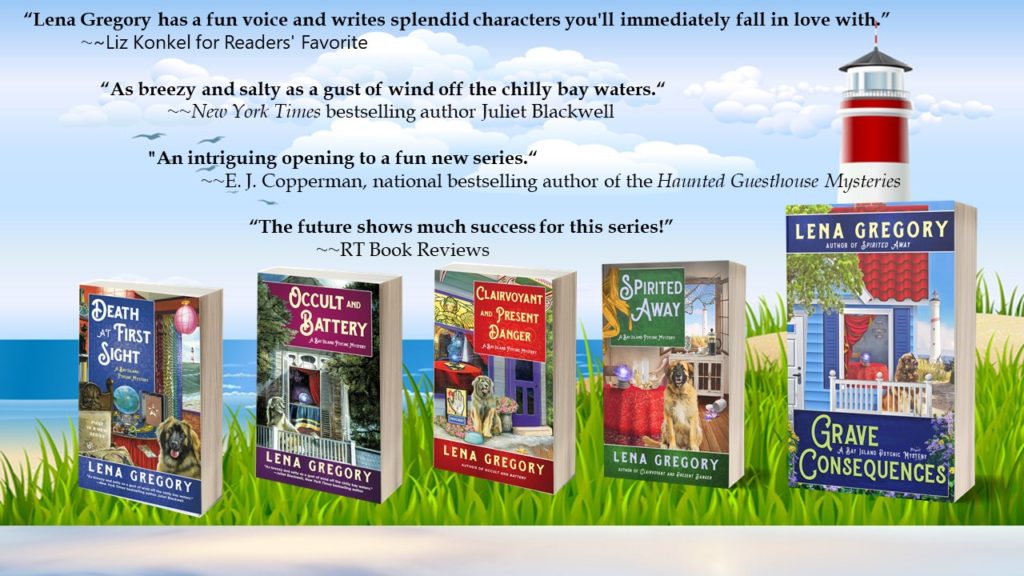
Lena Gregory is the author of the Bay Island Psychic Mysteries, which take place on a small island between the north and south forks of Long Island, New York, and the All-Day Breakfast Café Mysteries, which are set on the outskirts of Florida’s Ocala National Forest.

Lena grew up in a small town on the south shore of eastern Long Island. She recently relocated to Clermont, Florida with her husband, three kids, son-in-law, and four dogs. Her hobbies include spending time with family, reading, jigsaw puzzles, and walking. Her love for writing developed when her youngest son was born and didn’t sleep through the night. She works full time as a writer and a freelance editor and is a member of Sisters in Crime.

To learn more about Lena and her latest writing endeavors, visit her website at http://www.lenagregory.com/ and be sure to sign up for her newsletter http://lenagregory.us12.list-manage.com/subscribe?u=9765d0711ed4fab4fa31b16ac&id=49d42335d1.

WEBSITE & SOCIAL LINKS:

Website: http://www.lenagregory.com/
Twitter: https://twitter.com/LenaGregory03
Facebook: https://www.facebook.com/Lena.Gregory.Author/?fref=ts

About the Book

Cass Donovan is reminded that you can’t believe everything you hear, especially when it comes from the dead . . .

When stories begin circulating of a centuries-old ghost haunting the Bay Island lighthouse, Cass is caught up in mystical happenings of her own, with countless voices from the beyond all clamoring for her attention with dire warnings. But before she has a chance to learn whether there’s a connection between the rumored ghost and her restless visitors, the lighthouse keeper mysteriously falls to his death, and Cass’s reputation for communing with the dead lands her right in the middle of the police investigation.

Cass knows the victim was no saint, as he made little effort to hide his philandering ways from his wife or anyone else, and often acted out with no thought for the feelings of others. But had he finally gone too far, or were there more menacing motives behind his murder? As Cass begins building a list of suspects, including the man’s supposedly grieving wife and a mysterious new woman in town, she also turns her ear to those otherworldly voices, hoping for a clue. And as she begins to close in on the culprit, she realizes too late that if she’s not careful, she’ll soon be communicating with the dead in person . . .

BUY LINKS

Amazon: https://www.amazon.com/dp/B0881XMPB2/ref=sr_1_6?dchild=1&keywords=lena+gregory&qid=1588623125&sr=8-6
Barnes & Noble: https://www.barnesandnoble.com/w/grave-consequences-lena-gregory/1136968677?ean=2940162632931
Kobo: https://www.kobo.com/us/en/ebook/grave-consequences-10
Smashwords: https://www.smashwords.com/books/view/1019948

Bay Island Psychic Complete Series


Can you tell us what your new book is about?  

When stories begin circulating of a centuries-old ghost haunting the Bay Island lighthouse, Cass is caught up in mystical happenings of her own, with countless voices from the beyond all clamoring for her attention with dire warnings. But before she has a chance to learn whether there’s a connection between the rumored ghost and her restless visitors, the lighthouse keeper mysteriously falls to his death, and Cass’s reputation for communing with the dead lands her right in the middle of the police investigation.

Cass knows the victim was no saint, as he made little effort to hide his philandering ways from his wife or anyone else, and often acted out with no thought for the feelings of others. But had he finally gone too far, or were there more menacing motives behind his murder? As Cass begins building a list of suspects, including the man’s supposedly grieving wife and a mysterious new woman in town, she also turns her ear to those otherworldly voices, hoping for a clue. And as she begins to close in on the culprit, she realizes too late that if she’s not careful, she’ll soon be communicating with the dead in person . . .

Can you tell us a little about your main and supporting characters? 

Cass Donovan gave up her psychiatric practice in New York City and returned home to Bay Island to open a psychic shop on the boardwalk after she lost a patient, divorced her husband, and disowned her best friend. She now spends her time giving psychic readings and solving crimes with her two best friends, Bee and Stephanie. 


Your book is set on Bay Island, New York.  Can you tell us why you chose this location in particular? 

I created the fictional island between the north and south forks of Long Island, New York, where I grew up and lived until recently. I loved living on Long Island and wanted my town to have all of the same charm as a small Long Island town but with a little bit more remote setting. In book two, Occult and Battery, Bay Island is cut off from the mainland and help because of a blizzard.

How long did it take you to write your book? 

It took about three months to write and edit this book.


What has been the most pivotal point of your writing life? 

Starting to write cozy mysteries was the most pivotal point for me. When I first started writing, I wrote fantasy and sweet romance. When my agent suggested I might enjoy writing cozies, I gave it a try, and I loved it. It’s definitely my favorite genre to write and the one I’ve had the most success with.

What kind of advice would you give other cozy mystery authors? 

I would say make sure to take the time to research the genre. Cozies have a very specific set of guidelines that most readers expect to see.

Thank you so much for having me! 


Interview with Children's Book Author Karen Carew Oakes


Karen Carew Oakes, has been writing for many years and her articles have been included in the Lutheran Advent, as well as an article in several magazines. She is a mother and grandmother. She lives in Helotes, Texas with her two schnauzers Ella and Mackenzie. Her stories are based on true experiences her children encountered growing up.

Visit her on Facebook at https://www.facebook.com/karencarewoakes.  


What sparked the idea for writing Drewsilla, The Shelter Puppy?

 My daughter adopted a dog from a shelter and I wanted to share her story and encourage people to adopt not buy from stores.


Did you always want to be a children’s book author?

I didn’t start out wanting to write children books but situations in my life presented themselves that could pass along important messages.


Can you tell us a little about your main and supporting characters?

The main character is Drewsilla. The shy shelter puppy that was in need of a home. The supporting characters are the Johnsons who were seeking to adopt a pet


Your book is set in a shelter in Corpus Christi, Texas..  Can you tell us why you chose this location in particular?

This is where the story took place.

How long did it take you to write your book?

 The story came pretty easily, but perfecting it took a bit longer.

If you and your main character decided to go off and have some fun, where would you two go?

We would go to a dog park with a ball launcher and play all afternoon.

What was your favorite book as a child?

I loved Robin Kane mysteries as a child. I love a good mystery.

How can we get kids to read?

We need to create stories that excite a Childs imagination. They need to be able to picture the story in their mind even when there are no illustrations. 


What has been the most pivotal point of your writing life?

When I met an established writer who encouraged me to get my stories published. 


BOOK BLURB:

When Drewsilla and her siblings are tiny puppies, an accident steals their mother away. A kind stranger rescues them and takes them to a shelter, where the staff works around the clock to care for the pack of newborns. Soon, her brothers and sisters begin to thrive. Drewsilla has a beautiful black coat, intelligent eyes, and ears that stand straight up.

Drewsilla, though, is scared. She seems afraid of everyone and everything and hides in the back of her cage when families come to visit. As her friendly siblings each get adopted, lonely Drewsilla remains. The staff even worries that she might never find a home. Then, one day, something amazing happens.
The Johnsons come to the shelter to look at another dog and see Drewsilla, who miraculously finds the courage to stop hiding and say hello. All shelter dogs deserve the chance to find a loving family, and this is the true story of Drewsilla -- how she overcomes her fears, finds her family, and gets a second chance at a happy life.

ORDER YOUR COPY:

https://www.amazon.com/dp/B07J2BVKVN/ref=dp-kindle-redirect?_encoding=UTF8&btkr=1

Interview with Edward B. Irving, author of The Day of the Dragonking

Can you tell us what your book is about?

Oh, about 355 pages.

Sorry, couldn’t help that. A dragonking is a feature of enormously complex systems (global finance, politics, weather patterns) which is very powerful, makes up its own rules, and causes a great deal of change—or wreckage, if you prefer—in its wake. I wanted to write a book that took a normal city, added in a single dragonking-level change, and watched what happened.

Since the city I know best is Washington DC, that’s where the story is set and the disruptive change is actually a Change because I threw Magic into the mix. Now, I figured that there’s plenty of evidence that the government has been mucking about with low-level magic and psychics for a long time so I decided that all that stopped working and only one person would gain magical powers: The Last American Wizard.

The interesting thing about doing this is that you have to work out a system of magic that makes sense. I’ve never figured out where all the “Laws” of Magic come from: Vampires hate sunlight, Werewolves change at the full moon, Witches have to wear badly-woven hand-loomed clothes, etc. So I took a basic Aristotelian Air, Earth, Water, Fire split, added in the Tarot which begin with that split and then build on it. Finally, I decided that the Magic wouldn’t affect many, perhaps most people, because it conferred magical power in the same degree that the person or, in several cases, things had before the Change. Financial power, political power, self-awareness in particularly well-built computers and highly-customized and intricate things like cars.

People and things would tend to change to match their archetypes: Republicans, stubborn, big on traditional values, self-defense, and hard currency are Earth-based and natural Dwarves. Democrats, environmentally-conscious, changeable, fickle, and nurturing are Water-based Elves, journalists and such are ever-present Air, and radicals are Fire. The Magic doesn’t like guns, because guns make a story too easy.

Here’s how legendary newsman Buddy Ringwald, who has a problem with being somewhat deceased but is otherwise clued into DC describes things:

 “The Republicans are becoming increasingly shorter, hairier, and angrier, hard as that last part might be to believe. Their conservative wing is literally digging in–about two hundred feet down the last time I heard–and the most radical have begun to carry pickaxes. They say it’s only a symbol of a national desire to cut the government down to size, but they’re damn sharp all the same.”
He shook his head. “So far, the Speaker is still the Mountain King and able to keep the most volatile members of his caucus in line through his floor leaders and whips–well, his floor leaders using whips, to be precise.”
“And the Democrats?” Steve asked.
“Well, the president has renamed the White House the Alabaster Palace, the old bulls in the Senate are cultivating floor-length beards, and there’s a movement to replace armed drones with dragons, but those are all fairly minor changes, if you ask me. In general, being flighty and enigmatic simply means more of the same with those guys. No, the real problem is on K Street.”
“You mean the lobbyists?”
“Of course. They were pretty evil before, and now they’re downright demonic.”


Why did you write your book?

To be honest, I wrote it primarily for fun. I’ve always loved the Dresden series, Kim Harrison’s Hollows, and Ilona Andrews Magic Atlanta. Relatively normal people having to deal with extremely abnormal situations. It’s a lot more fun than regurgitating Tolkien again. (My dad was a professor of Old English like J.R.R.Tolkien so he read us the whole series in the 1950’s. When it became popular, I had to hide the fact that I already knew all the trivia.)

The other thing is that there are quite a few strange places in DC already (as I suppose Dan Brown has pointed out. I don’t read him—terrible writer,) I’ve run into some fairly odd things as a reporter (the Alien Ambassador on Capitol Hill is a true story,) and, with just a bit of research, Ghosts in Washington Post, Masonic mysteries by the truckload, and disappearing taverns pop up everywhere.

People tend to live in Washington on a surface level, accepting the place as just a place. It’s not. It’s knee deep in history and has been completely torn down and rebuilt at least 4 times. In addition, throwing Magic into things like the massive NSA supercomputers, or our enormous number of statues, and all the mystic ley line crap that simply appears when you need a plot line (X Street is a great example) and you’ve got a fun book.


Can you tell us a little about your main and supporting characters?

Well, it’s a strange group:
Steve Rowan is a failed freelance journalist with his best years behind him. When he is the only person who can perceive the jet filled with screaming passengers that goes over his apartment and crashes—well not exactly crashes, but you should read that part yourself. Anyway, Steve, who is a natural cynic and not terribly endowed with courage, strength, or well, anything; is told that he is The Fool. In the Major Arcana, the Fool has the most and the least power, is made up of all four elements, and is the most important card. Steve doesn’t believe a word of this nonsense, of course.

Except why is his apartment destroyed and his car buried under a jet engine that no one else can see?

Steve gets a phone call from a computer program named Barnaby who was the first program ever run at the NSA (almost true, the first program was named Atlas but Barnaby came from the same old comic strip.) Barnaby has seized control of most of the NSA’s computers and appoints Steve to go out and find the perpetrators who killed a plane-load of people to bring Magic into the world.

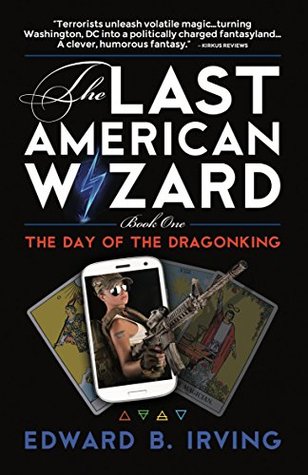
To help Steve out because by himself, he couldn’t whip a baby dragon, Ace Morningstar is assigned to protect him and generally kick butt. That’s Ace on the cover art. Ace used voodoo to appear to be a man so she could pass BUDS (Basic Underwater Demolition School) and then SEAL training out at Coronado Beach. She is clearly the Ace of Swords, the most skilled fighter in the Tarot deck. She doesn’t think much of Steve but who does?

Steve’s cell phone begins to talk in terrible auto-translations and eventually turns out to be a young Chinese worker who fell to his death while intending to land harmlessly in the anti-suicide nets the owners had strung around the facility. At the moment of his death, he was entombed in the smartphone that was just finished and, with a little magic, he can talk. Badly.

Those are the four primary characters but they are joined by Ace’s BMW, a W-Class which even car magazines called massively over-powered for an SUV, the ancient Native American trickster Coyote, the leader of a drug gang who is turning into the hoofed dog of the mountains of El Salvador, the Illuminati who claim to have created the change but no one thinks they were ever smart enough—after all they’ve been drinking since 1776—and a broad assortment of other characters.


Do you tend to base your characters on real people or are they totally from your imagination?

I have found that most of the people I know are as boring as I am and so allow as many strange people as possible to wander into the book.

Yes, I know it sounds odd or phony, but I generally don’t know how a character will react until they show up and get involved. Honestly, I have very little control over the little monsters in my books and they never seem to go where I plan. On the other hand, I find I really like most of them after a while, they grow on you.

Here’s an example of Steve and Ace trying to get some information out of the notably verbose Barnaby:

“Now, some of my brighter colleagues have been trying to crack all possible methods of mystical communications. It’s a completely new project, and more than a few servers have blown, and one or two can’t really be described as ‘computers’ anymore–as a matter of fact, I’m fairly sure that they’ve completely discarded their physical forms and just come back every once in a while to chat. Apparently, the plane of pure consciousness is a pretty boring place.”
“Off topic,” Ace said abruptly.
“Yes. Yes. I am,” the computer admitted. “The point is that the STORMBREW system out in Utah is reporting that they’re having success with what can only be described as ‘séances’.”
“You’re kidding,” Steve said.
“No, I’m afraid I’m not, and if you’ve never spoken to an opportunistic distributed system made up of Cray Titans, IBM Sequoias, and Chinese Skyriver 2s as it’s trying to climb down from the yottaflop range, you have no idea what ‘spooky’ means.  STORMBREW got through to Harry Houdini a couple of hours ago and is now sifting through about five thousand spirit guides a second. STORMBREW turns out to be an amazingly apt codename. I mean, there are data halls where the danger from floating tables alone–”
“Off topic,” Ace repeated.
“Yes. Well. The point is that there is some success in breaching the communications of…well, Stormy, is the  nickname the lead server chose for the entire group, is reasonably sure that there is a transfer of information, it is emanating from somewhere on Earth, and it ‘tastes’ like the Illuminati, but beyond that, it’s not very clear.”
“I’ll say,” Steve said dryly.
 “This should be easier to understand,” the computer continued. “Two of the more energetic sub clusters– BLARNEY and OAKSTAR–report making out chatter indicating that there is another event being planned that is similar to the American International crash but far more powerful.”
“How much more powerful?” Steve asked.
“In the kilo-logos range.”
“‘Kilo-logos’?” Steve said slowly.
“Yes. From ‘logos ,’ one of the Greek words for soul.”
“I hate to ask, but what was the American International event on this ‘kilo-logos’ scale?”
“Tragic as it was, it only measured .041.”
“So, we’re talking about a hundred thousand lives?”
“One hundred thousand souls, to be precise. However, discounting the odd person who is currently possessed by a demon or collateral damage among household pets, yes, a hundred thousand people will die.”
Ace went back to her gear and began to replace various rounded, flattened, or rubberized items with those with sharper blades and barbed razor points.

I really have to point out, except for the names of most of the computers and clusters-which are accurate, I have no idea where this conversation came from. I know I wrote it but other than that, it’s rather, well, magical.


Are you consciously aware of the plot before you begin a novel or do you discover it as you write?

Plot? I don’t have a plot when I begin to write.

I do, however, take plot very seriously so as I go through my average of six revisions, I start to check with the Seven Basic Plots, the Twenty Major Plots, How to Write a Damn Good Urban Fantasy and even go so far as to color-code sections so that I be sure that points of stress and instances of relaxation are relatively even. In thrillers, you’re generally following the Kill the Minotaur plot and that has a nice sine wave to it that crests at the end.

In Dragonking, the nature of the Tarot Cards has a great effect on the plot. I’m not as good as Tim Powers who build an entire Tarot Poker game into the subplot of Last Call but I do try. All the primary characters are driven to move in certain ways—like a chess game—and, in the end, it’s the Fool who saves the day.

Well, sort of.


Does the setting play a major part in the development of your story?

Sure, Washington DC begins as a Masonic Pentacle with major avenues along the American Meridian and the Eastern Fall Line. There are strange statues of forgotten people and entire areas of the city that the average commuting cubicle commando will never see. Everything is laid out on East-West lines with major buildings forming triangles and parallels—I mean, What’s to Make-Up?

Oh sure, I added a bit more action to the Bladensburg Dueling Grounds but the original is there and I went in and out of the White House enough as a courier to know exactly how the security works and there are two enormous sphynxes sitting on 16th Street named Wisdom and Justice. I just made them fly and ask riddles.

I mean, I do a bit of research, ideas pop into my mind, and we’re off to the races. It’s fun.


Have you suffered from writer’s block and what do you do to get back on track?

I did TV deadline writing for 25 years and was a breaking news producer before that. I’ve edited stories to air by mixing between three different live tape machines and an incoming satellite feed, changed scripts on the anchor’s teleprompter, and, in ten minutes, wrote a moving obituary of someone I didn’t even know.

I’m more likely to suffer from total block and just have a day where I don’t want to do anything, my back is killing me, and I go back to bed and listen to an Audiobook. On the other hand, I’ve had clinical depression for my entire life (and fighting the stress of that won me 4 Emmys!) and am pretty used to it by this time.

Getting back on track is really a matter of putting words into the computer. It doesn’t really matter what you write, just start clicking the keys.

It’s funny, my first script ever was for Steve Kroft back when he was a reporter in Miami. We had a program at 6:00 in those days and at 5:15, Steve turns to me and says, “I have to do a script for the station, you write the World News script and I’ll just read it.”

My throat closed up and I was completely unable to breathe. When I got back to the station, I put a piece of 5-page carbon paper (it was a LONG time ago) in the typewriter and put my fingers on the keys. I really don’t understand it but a decent script came out the other end. Every terrible time since then (and there have been many,) I did the same thing—just put my fingers on the keys.

It’s really not something you want to think about too much but, then again, I’m writing silly things like thrillers and books about Magic in Washington. They ain’t the Great American Novel.


What do you like the most about being an author?

It’s something that I can do in a Hawaiian shirt, jeans, and bare feet. Plus, no one is yelling at me.


What is the most pivotal point of a writer’s life?

I guess the most pivotal point is when income from writing beats the expenses of writing and you go into the black. Next would be when you can support yourself by writing. Being published by a real publisher is nice as well.

I’m not at all sure that any of these is possible with the current turmoil in the publishing industry but it’s worth a try. Write what you like to read, write a LOT of it, and ignore the critics. When you have something that you think is really good, start sending out agent letters.


What kind of advice would you give other fiction authors?

The Villain should be evil and the Hero should be good.
If something happens, it should be the Hero who made it happen.
Something should happen about every other chapter. 
You can’t just kill people and leave them lying around.
There is no such thing as a “flesh wound.”
Don’t explain things too much (Yeah, I’m talking to myself on that one.)
When you finish, the reader should cheer for the Hero.

You would be amazed how many books don’t follow these Rules.


Inside the Book:


The Day of the Dragonking


Inside The Book
Title: The Day of the Dragonking
Book 1: The Last American Wizard Series
Author: Edward B. Irving
Publisher: Ronin Robot Press
Publication Date: Paperback - February 2, 2106 / eBook - May 17, 2016
Pages: 316 pages
Genre: Urban Fantasy / Satire

Book Description:

A “mystical terrorist group” sacrifices an airplane full of innocents to a dragon and uses the deaths to power an event that wreaks magical havoc on Washington, D.C. All the wizards in the U.S. government’s employ abruptly lose access to magic, and the world’s computers and gadgets become sentient.

Second-string journalist Steven Rowan embodies the tarot's Fool and is forced to figure out the card's magic on the fly. Bombshell soldier Ace Morningstar, who used her magic to disguise herself as a man so she could become a SEAL, drafts Steve and his cell phone, which contains the ghost of a Chinese factory worker who now communicates through screen animations and bad autotranslations, to help fix the mess. Gathering allies, including NSA supercomputer Barnaby and Ace's BMW, Hans, the team fights off newly transformed demons, dog monsters, and ogres while trying to find out who is controlling the Illuminati before the villains embark on the next step of their world-domination strategy.


Book Excerpt:

The airplane crash woke Steven Rowan. To be entirely accurate, it wasn’t a crash.
It was the insane screaming of four of the world’s largest jet engines being pushed twenty percent past their factory- recommended maximum thrust only thirty feet over his head.
 In addition, awake wasn’t really the correct term for his state of consciousness at that point.
 Steve was standing stark naked in the center of the room, jerking back and forth in the classic fight-or-flight reflex–his mind frantically spinning between possibilities, developing and rejecting dozens of possible threats every second, and running throughas many options for escape. A small part of his mind was simultaneously working on the less-important questions of who he was, where he was, and what he’d done to himself the night before.
 The pulsating howl of the jet began to diminish, but the screaming only grew louder and more intense. Suddenly, Steve fell to his knees, slamming clenched fists into his temples over and over, and screaming at the top of his lungs.
 Tears flew from his eyes as he crawled forward and began to pound his head against the glass door to the balcony. A small rational part of his mind wondered that he could be driven to such desperation that he would fill his mind with self-inflicted pain in the vain hope that it would expel the shocking sound, the sheer terror, and the infinite grief.
He felt a sharp spark of agony as the glass cracked.
 Suddenly, as blood began to stream down his face, the terrible pain diminished. The confusion and terror, the immense waves of emotions, all of that continued to pour through him, but the anguish had ceased. The massive assault of sound began to break down into hundreds of what he could only think of as voices.
Men and women were screaming, a mother was kissing the top of a tiny head and whispering soothing sounds, a man on a cell phone was frantically dialing and redialing–desperate to leave a message. In contrast, two men were running through a checklist with professional calm, but curses tickled at their throats, fighting to get out.
In the center, he heard a steady sound. A quiet chanting– young voices tinged with success and anticipation.
 The glass door exploded.
****
It was going to be a lousy morning, his head hurt even worse than usual, and his head usually hurt like someone dying from alcoholpoisoning.
 Steve opened his eyes at the sound of someone singing about hiding in Honduras and needing “lawyers, guns, and money.”
 OK, that was Warren Zevon, so it was probably his phone ringing. On Mondays, he set it to Afroman’s Because I Got High just to irritate any senior editorial staff he might run into, but this song pretty well summed up his mood every other day.
 He waited patiently until the late Mr. Zevon finished singing about how “the shit has hit the fan” and then listened for the Asian gong that would indicate a phone message.
 Instead, Max Weinberg’s driving drumbeat pounded out the syncopated SOS that began Bruce Springsteen’s We Take Care of Our Own. Since every journalist knew (but would never report) that this song raised the dead whenever the Boss played within a mile of a graveyard, Steve figured someone was truly serious about talking to him.
 In addition, he was curious because he’d deleted it from his phone over a month ago, exhausted by its contrast between the American ideal of “help your neighbor” and the reality of greed and selfishness that was currently sweeping the nation.
 “Hello?"
There was a series of clicks and several of those odd changes in the quality of silence that indicate a call is being bounced from machine to machine or area code to area code. Of course, these were also the sounds that you heard when a telemarketer’s robot war dialer realized it had a fish on the line and switched in the human voice to make the sale.
 “Is this a freaking robot?” he said, sharply.
 There was a short pause without any clicks. For some reason, Steve thought the caller was thinking.
“Mr. Rowan?” It was a man–the deep and authoritative voice of someone used to giving commands.
“Who the hell wants to know?” Steve hated people with that kind of voice.
Another pause.
“Mr. Stephen Rowan of 14500 Windermere Drive, Apartment D2?” The voice had changed, just slightly. It wasn’t quite as abrasive and superior. Steve thought he could have a conversation with this guy.
“Yes.” Steve’s state of awareness was beginning to recover sufficiently so that it wasn’t taking all of his concentration to talk on the phone. Unfortunately, that allowed him to begin to look around the room. If he hadn’t just received his ten-year chip from Narcotics Anonymous, he would have instantly identified this as a drug dream—and not a pleasant one.
The smashed sliding door. Glass shards covering the carpet. The dozens of framed photographs he’d hung to remind himself of the good times when he’d worked in cool places were gone. They were in a heap of wood, glass, and photo paper on the other side of his bed. Only one remained. A picture of a Lebanese militiaman with an AK-47 wearing a T-shirt decorated with a picture of an AK-47 and the words “Lebanon War.” He reached over and straightened it.
 “Mr. Rowan.” The voice on the phone had changed again. Now it sounded like a person cowering with fear. Hell, this guy was afraid to speak to him. “Umm. Are you busy at the moment?”
 Steve looked around the wreckage of his apartment. His cheek tickled and he touched it with a finger. He stared at the blood on his fingertip. “Busy? No, not really.”
 “Would you be so kind as to consider possibly doing me a favor?”
 Now the voice had gone all the way to obsequious.
 “Not until you tell me who the hell you are and what the hell you want.” Steve licked his finger, tasting the blood as if it might tell him something about what had just happened. “And stop sucking up.”
 “‘Sucking up’?” There was another series of clicks and silences, and the caller continued in its previous, more confident tone. “Mr. Rowan. Let me ask you a question. Could you use a job?”
 Steve reached into his back pocket to check his wallet for his current financial position. Suddenly, he felt a hand stroke his butt. He jumped. When he looked down, he realized it was his own hand because he was still naked. Then, a sudden stab of pain proved that the silvery dust all over him was tiny bits of glass from his broken door and he’d just shoved a shard into his ass. He pulled his hand away sharply and held it out in front of him–carefully examining both sides.
 “Mr. Rowan?”]
 “Oh. Sorry, I was distracted for a second. What...Oh, yeah. I have plenty of money.”
“From your increasingly occasional work as a freelance reporter?”
Steve didn’t say anything. The caller continued. “How’s that working out for you?”
Steve surveyed his ruined stereo and television and stopped as he saw his metal-cased laptop. It was rolled into a cylinder. He wonderedwhat in hell could do that to an expensive computer. Or at least one that had been expensive when he’d bought it.
 “Don’t worry about the laptop. I think you’ll find your telephone will be sufficient."
Steve’s eyes widened and he slowly pulled the cell phone away from his ear and regarded it carefully–again, front and back. When he turned back to the main screen, a cartoon of a hand making a “thumbs up” sign had replaced his usual home screen picture of the Lebanese militiaman.
Steve just stood there and looked at the hand. He knew it was a cartoon because it only had three fingers and a thumb. Somehow, the artist had made it look happy and confident. That worried Steve.
He heard a faint squawking from the phone. He held the phone with only two fingers and raised it gingerly until it was an inch from his ear.
“Mr. Rowan? Can you hear me?”
 Steve cleared his throat and answered carefully. “Yes.” “Good, we can continue.”
 “Not until you tell me how you knew about my computer, we can’t.”
 “Your computer? Oh, you mean that you were looking at it?” “Yes. How did you know that I was looking at it?”
The voice sounded more confident, almost comradely. “That’s easy. Look straight out your window. See the apartment building with the exterior stairs?”
 “They all have exterior stairs.”
 “Well, the one with stairs and exceptionally ugly pink paint.” “Got it.”
“OK. Look at the left edge of the building and then run your eye straight up.”
 Steve saw the gleaming black cube of a building on the other side of the Baltimore-Washington Parkway. There were dozens of round white satellite dishes on the roof.
 “OK, I see the building across the highway. The NSA or Fort Meade or whatever.”
 “Just keep watching.”
 Slowly, almost ceremonially, all the dishes on the roof turned, swiveled, swung, or tipped so that they were all pointed straight at him. Without thinking, Steve’s left hand moved to cover his crotch.
 He made a noise, but it wasn’t a word. Something between a cough and the beginning of a scream, but definitely not a word. On the top of the black building, all the dishes nodded up and down in what he could only describe as a friendly fashion, and then moved back to their original positions.
  “Mr. Rowan?”
 Steve cleared his throat again. “I guess you just made that happen.”
"Yes.”
 “That was better than anything I ever saw in college, even on mushrooms, but it still doesn’t tell me who you are.”
“No.”
 “But it does answer the question of how you could see me.” “Yes.”\\
“And demonstrates a certain amount of power over things.” “Things and quite a few people as well.”
“I would have to say that that remains to be proven, but I can agree that you’ve gone a long way in that direction.”
“Why don’t we leave the rest of your questions for a later time and let me ask you one?”\
Steve’s eyes wandered from the roof of the building across the highway. “What am I looking for?” he wondered.
Then he remembered.
 “Give me just one more question first.” Steve walked out on the balcony and scanned the horizon as far as he could. “Where is thesmoke?”
“Smoke?”
“Smoke. From the crash of the plane that just flew over me.”
“Mr. Rowan. Can I suggest you step back inside? Good. You were frightening several of your neighbors. No, there is no smoke and, as a matter of fact, no airplane. Since there is no airplane, there wasn’t a crash and, ergo, no smoke. That’s one of the things I’d like to hire you to investigate.”
 Steve thought for a second. “I don’t like it when people say ergo. But we can deal with that later. Right now, I’d like to know why–no wait, let’s begin with how I would investigate the nonexistent crash of an airplane that wasn’t there.”
 “You’re getting a bit redundant.”
“You’ll have to live with it. It’s a side effect of the unease I’m feeling due to the stress of this uncommon and aberrant situation.” Steve’s voice rose to a shout. “Stop fucking around and tell me what the hell is going on!”
 “Well.” The voice on the phone paused as if choosing the next words carefully. “The jetliner did crash. At the same time, it did notcrash.”
 “OK, I’m relieved that you made that clear. Now that I understand, I’m hanging up.”
“Mr. Rowan! Wait! Just one more minute.”
Steve didn’t say anything, but he didn’t punch the END symbol, either. He really wasn’t sure why.
“There has been a Change.”
Steve blinked and looked at the phone. He put it back to his ear. “Did you just capitalize the word change?”
“Hmm? Oh, yes, I suppose I did. This particular change is a pretty big deal and certainly deserves to be capitalized.”
“I’ll be the judge of that. What do you want me to do about this capitalized concept?”
 “Would you work for me? Investigate this Change?”
 Steve’s answer was quick and automatic. “I’m an experienced freelancer. I don’t work for just anyone.”
 “Really? Not even if it was for the Good of the Nation?”
“Stop talking in capitals and, if you mean working for the government, the answer isn’t ‘no.’ The answer is ‘Hell, No.’”
"I believe those last two words were capitalized.” Steve’s head felt like it was about to explode. 
“Possibly.”
“Would it make you feel better if I hired you on a temporary freelance basis?”
Once again, the answer was swift and automatic. “What are you paying?”
 “Well, I think I have unlimited funds...”
 “Then you’re full of crap. I’m hanging up now.”
The phone began to vibrate in his hand and the voice became agitated. “Mr. Rowan. Don’t do that! It has to be you. No one else observed the airplane!”
 Steve’s eyes closed and whatever it was that had woken him up came back with the feeling of a knockout punch. His face twisted up in anguish at the memory of all the people...their terror...their helpless panic. He groaned.
 “Mr. Rowan! Are you all right?”
“Not one of my better mornings.”
 “I am actually glad to hear that.” 
“Why?”
Because I’d hate to think of what it might take to cause a worse morning. What’s your daily rate?”
 “Five hundred dollars. Double over ten hours.” Steve always held out hope even though he hadn’t made over $350 a day for the pastdecade.
 “You’ve got it.”
 Steve opened his eyes. “Plus expenses?” “Expenses and the use of a car and driver."
“A car?” Steve walked over and looked out to the space in the parking lot where he’d parked his light-blue Prius. He thought it was still there, but it was difficult to tell because an enormous jet engine was smoking sullenly on top of the entire row of parked cars.
 He could make out some twisted pieces of light-blue plastic in his usual parking space.
 “I guess I will need a car.”
 “Good. Then we are in business, right?” “I guess so."
“Good. I’ve got some things to do right now, but I’d appreciate it if you could begin immediately.”
Steve slowly turned around and looked at his apartment. His clothes looked as though a knife-wielding fashion critic had attacked them. He touched his laptop and it rolled away, revealing fluttering bits of paper that he deduced must be his stack of notebooks. One of his shoes was lying by his right foot. He picked it up and slowly poured broken glass out onto the floor. “I’m going to need to be paid up front, I think.”
 “Not a problem. Just answer the door.” 
There was the synthetic clicking sound that cell phones made to indicate the end of a call.
 “Answer the–”
 There was a firm knock on his door.


For More Information:
The Day of the Dragonking is available at AmazonBarnes & NobleGoodreadsNetGalley
Discuss this book at PUYB Virtual Book Club at Goodreads


Meet the Author


Terry - Edward Irving


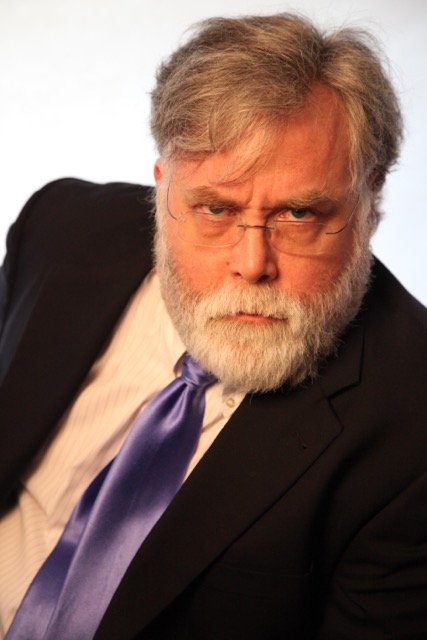
Edward Irving was a respectable television journalist for 40 years in Washington D.C. Any shred of respectability has been destroyed by "The Day of the Dragonking." He is waiting for the committee to call and demand his 4 Emmys back at any time.

He has worked for just about every TV channel: Nightline, Wolf Blitzer, Don Imus, and Fox News Sunday - talk about culture clash! He has written 4 documentaries - mostly on Moral Courage - and the last one was particularly fun since it was about rescuing Jews to the Philippines, a decision made over poker and cigars by Manuel Quezon, Dwight Eisenhower, a private detective named Angel Zervoulakos, and brothers from a family that was the biggest importer of cigars to the USA.

Mr. Irving enjoys many things he can't do anymore: motorcycles, racing cars, hang-gliding, scuba-diving, and long vacations. The good thing is that he can put them into books. He has a very forgiving wife, two kids, two grandkids, and a LOT of old books.

For More Information: Author Website  Facebook Twitter Goodreads Goodreads - 2


Tour Schedule


The Day of the Dragonking Banner