Showing posts with label Attila the Hun. Show all posts

Book Review: The Last Wife of Attila the Hun, by Joan Schweighardt


The Last Wife of Attila the Hun by Joan Schweighardt is an ambitious, superbly researched, excellently written novel based on Germanic legends and the true life of Attila the Hun that will mesmerize fans of historical fiction. There isn’t a lot of fiction based on Attila, so being a lover of history I was instantly intrigued about reading the book.
The novel moves back and forth in time, interweaving two stories. In one, we meet Gudrun, a brave Burgundian noble woman with a lethal mission, destroy the infamous Attila the Hun. In the other, the reader travels to the past to learn the overwhelming events that brought Gudrun to this difficult, suicidal undertaking.
From the beginning, Schweighardt’s imaginative storytelling and attention to detail shine through the pages, bringing Attila’s fifth century landscape to life in all its gritty vividness. Characters are deftly drawn, and I found myself instantly sympathetic to Gudrun’s situation, as well as absorbed by the other characters. This was especially true of Attila’s second in command, with whom Gudrun develops an unusual relationship. Attila himself is portrayed in chilling detail.
Needless to say, I love the fact that the story is seen from a female perspective. At times, her focused obsession for revenge propels the tale at a breathless pace. Juxtaposing with her present life as Attila’s prisoner are her memories of her great yet tragic love with Sigurd.
I’m not surprised the novel has won awards and it’s been translated into other languages. Dark, mysterious, and beautifully layered, The Last Wife of Attila the Hun is filled with lust, revenge and passion, and comes highly recommended by this reviewer. If you’re a historical fiction enthusiast, this is for you.
Find out more about Joan Schweighardt here. Read my interview with her on Blogcritics. Purchase the book on Amazon. 

A Conversation with Historical Fiction Author Joan Schweighardt


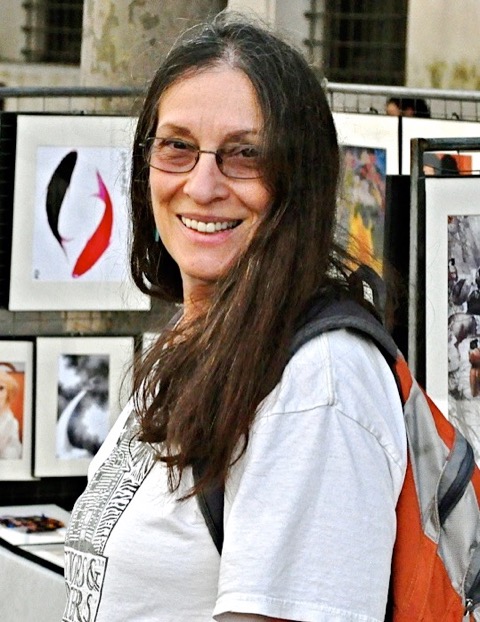
Joan Schweighardt is the author of several novels. In addition to her own projects, she writes, ghostwrites and edits for private and corporate clients. Her latest novel is The Last Wife of Attila the Hun. 

Links:

twitter@joanschwei

What’s inside the mind of a historical fiction author?

I liken researching for historical fiction to spelunking. You enter a cave and begin to search for those exquisite details that will really bring your story to historical life. Most caves are not simply linear chambers that lead you from an entrance to an exit. There are sub-chambers, and sub-sub chambers and so on. You never know where you’re going to wind up or what you’re going to find. You can get lost. And most fun of all, in many cases the chambers you discover will not only enrich your story but they will actually impact the plot in ways you didn’t imagine. I count on the process to direct me to plot points I might not have thought of on my own.

What is so great about being an author?

If you love to write, being an author is great, just the way that it’s great if you love horses and get to ride all the time.

When do you hate it?

I complain a lot about how hard it is in these times to draw attention to books that are not published by one of the five big publishing houses that are able to throw money and clout behind their titles. I’d love to have a wider audience for my work. Not having the audience I want sometimes makes me question why I bother. But then I think about all the reasons I bother and go back to writing again

What is a regular writing day like for you?

I am at my desk every weekday by 8:00 a.m. But I don’t work on my own projects until I’ve finished client work. Sometimes I have no client work for a few consecutive days and can really focus on my own projects.

Do you think authors have big egos? Do you?

When I’m actually in the process of writing, I kind of feel ego-less, because I am concentrating on the thing I am doing and not on myself. I assume other writers feel the same.

How do you handle negative reviews?

Nowadays most of the reviews a body gets are from the public at large, as opposed to professional reviewers. Some people are used to reading very uncomplicated books with unrealistically happy endings. So, if they accidentally purchase something a little darker or more challenging, they may say bad things about it. That can be hurtful to an author. 

Everyone loves to get a positive review. But in these times I think some people are more interested in the number of reviews they get than in whether they are negative, positive or somewhere in between. If you have 600 reviews on your Amazon page, readers will think they’re missing out on something and to jump on the bandwagon. That’s why lots of people “buy” reviews. I still can’t get my head around the idea of ever “buying” a review, but I understand where the people who do buy them are coming from. We all want to sell books.

What is the usual response when you tell a new acquaintance that you’re an author?

People are more interested to know I am a ghostwriter for clients than to know I write my own books too. They always want to know how the ghostwriting process works, how I get the information from my clients and whether I include my name on their books. (I don’t.)

What do you do on those days you don’t feel like writing? Do you force it or take a break?

Since I write for a living as well as for my own pleasure, I am pretty much always writing. I take a break on weekends. Sometimes if I have having trouble with a project, whether for a client or myself, I tell myself that if I want I can get a book and go lie down on the sofa and read until I fall asleep. That’s my escape valve. Knowing I can do that if I want to keeps me from ever actually doing it (mostly).

Any writing quirks?

I’m sure I have plenty but I don’t know what they are. When I’m writing fiction, I do the dialogue between characters out loud, often saying the words with the intonation they would. That doesn’t feel quirky to me, but if my husband is home and happens to overhear me, he’ll raise an eyebrow and give me “the look.”

What would you do if people around you didn’t take your writing seriously or see it as a hobby?

I’m happy to say the people who mean the most to me take my writing seriously, probably because they are mostly writers—or painters or photographers or musicians, etc.

Some authors seem to have a love-hate relationship to writing. Can you relate? 

I’m shrugging. I never “hate” writing. I do dislike many things about the publishing process, such as the need to market your work on social media and the fact that there are so few professional reviewers these days, and the ones that exist are inundated with review requests. But as for the writing process, I have no complaints. I love the process.

Do you think success as an author must be linked to money?

We all need money to pay the bills. While you can derive immense pleasure from doing the thing you love—whether it is writing or knitting or making flower arrangements—if you can sell your book or sweater or bouquet to someone who appreciates the love you put into it, so much the better.

What has writing taught you?

Writing taught me to think at another level. I don’t know if it’s a deeper level or just another level. I do a lot of lucid dreaming, where I am asleep and awake (or at least aware) at the same time. I think that comes from writing all my life, from trying to grasp the thoughts behind thoughts before they slip away.

Leave us with some words of wisdom.


My best advice for first time writers and writers who just want to write better is read, read, and read. And don’t just read books in your genre of preference. Read everything, all the time. 

Guest post: "Novelists Who Look Behind Them" by Historical Novelist Joan Schweighardt

I am noticing that a lot of my favorite writers are looking back in time to find fodder for their stories. In The Museum of Extraordinary Things, Alice Hoffman brings to life New York City in the early twentieth century, with a particular emphasis on Coney Island. I knew a lot about the NYC sweatshops and street life from that time, but I didn’t know much about Coney Island, and I was as fascinated by her rendering of it as I was with the story she set therein. Another favorite writer, Emma Donogue, brings nineteenth century San Francisco to life in her novel Frog Music. Her story (based on a true unsolved crime) unfolds against the background of one particular summer’s historic heat wave and smallpox epidemic. Again, it was fascinating to have a wonderful capable writer bring this moment in history to vivid life. Then there’s The Orphan Train by Christine Baker Kline, which illuminates depression era orphans in NYC who were shipped out to work at jobs in the Midwest. The list goes on.

I never much cared for dry historical texts, so having a chance to regard historical events as perfectly restructured backdrops for good fiction is a great pleasure for me. But I notice the publishers for the three novels mentioned above go out of their way not to label these titles “historical novels.” I agree that first and foremost they are literary novels, but “literary” doesn’t reveal very much information, and I might have been inclined, had I published them, to call them “literary historicals.”

I see their point though. Historical fiction as a genre seems to have shot itself in the foot in the 70s and 80s when it took historical romance under its wing as a sub genre. There were so many historical romances for a couple of decades that the terms historical romance and historical fiction seemed to have merged. The former brought the latter down a notch, because while many historical romances are extremely good, some of them merely provide historical settings for formulaic relationships among the characters. “Historical” became a bad word in literary circles as a result. In more recent years historical fiction seems to be gathering back the strength it once had, but it’s happening slowly.

My novel, The Last Wife of Attila the Hun, has two strikes against it. It’s historical in part, and it’s also got a legendary component. Since most legendary materials can be labeled romantic, it’s easy to call it a historical romance. But that’s not what it is. It’s definitely a hybrid, and I’m still trying to figure out how to refer it myself. But that’s okay. I like research, and the avenues I’ve been following to try to discover how to talk about my novel are leading me into some unexpected corners.


Title: The Last Wife of Attila the Hun
Genre: Literary/Historical Fiction with a Legendary Component
Author: Joan Schweighardt
Publisher: Booktrope Editions
Purchase on Amazon
About the Book:
Two threads are woven together in The Last Wife of Attila the Hun. In one, Gudrun, a Burgundian noblewoman, dares to enter the City of Attila to give its ruler what she hopes is a cursed sword; the second reveals the unimaginable events that have driven her to this mission. Based in part on the true history of the times and in part on the same Nordic legends that inspired Wagner’s Ring Cycle and other great works of art, The Last Wife of Attila the Hun offers readers a thrilling story of love, betrayal, passion and revenge, all set against an ancient backdrop itself gushing with intrigue. Lovers of history and fantasy alike will find realism and legend at work in this tale.
DSC_0962
About the Author:
Joan Schweighardt is the author of several novels. In addition to her own projects, she writes, ghostwrites and edits for private and corporate clients.
Twitter: @joanschwei